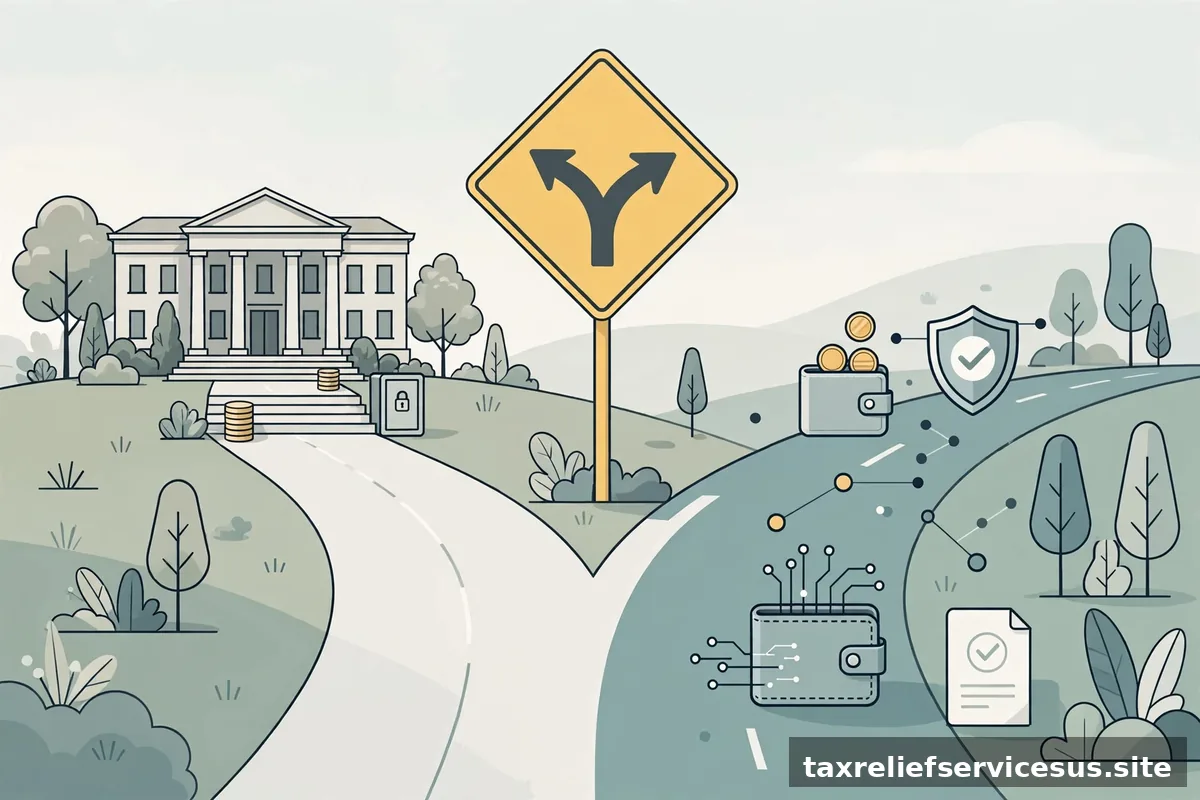
When you cannot pay the IRS in full, the first fork in the road is a simple question: how fast can you realistically pay it off? The IRS effectively offers two lanes — a short-term plan for balances you can clear within about 180 days, and a long-term installment agreement that stretches payments over up to 72 months. Picking the wrong lane costs you money or sets you up to fail.
This article compares the two options head to head so you can choose based on your balance, your cash flow, and the true cost of each path. As with all our guides, this is general information, not tax or legal advice.
The Two Lanes at a Glance
| Feature | Short-term plan (up to 180 days) | Long-term installment agreement |
|---|---|---|
| Payoff window | Up to 180 days | Up to 72 months (6 years) |
| Setup fee | None | Yes — varies by application method and payment type |
| Application | Online or by phone; quick | Online, phone, mail, or in person; Form 9465 available |
| Financial disclosure | Minimal | Minimal for streamlined balances; detailed for larger ones |
| Interest & penalties | Continue to accrue | Continue to accrue |
| Best for | Temporary cash-flow gaps | Balances you cannot clear in six months |
Short-Term Plans: The 180-Day Sprint
A short-term payment plan is for taxpayers who need a few months, not a few years. You tell the IRS you will pay the full balance — tax, penalties, and interest — within 180 days of applying. There is no setup fee, which makes this the cheapest formal option, and the application is quick.
The catch is discipline. The IRS expects the full balance gone within that window. If month five arrives and you are nowhere close, you will need to convert to a long-term agreement (and pay its setup fee) or face renewed collection pressure. Short-term plans work best for:
- A freelancer waiting on a big invoice that will cover the balance.
- Someone selling an asset or expecting a bonus within a few months.
- A taxpayer whose balance is small enough that aggressive budgeting clears it in half a year.
Long-Term Agreements: The 72-Month Marathon
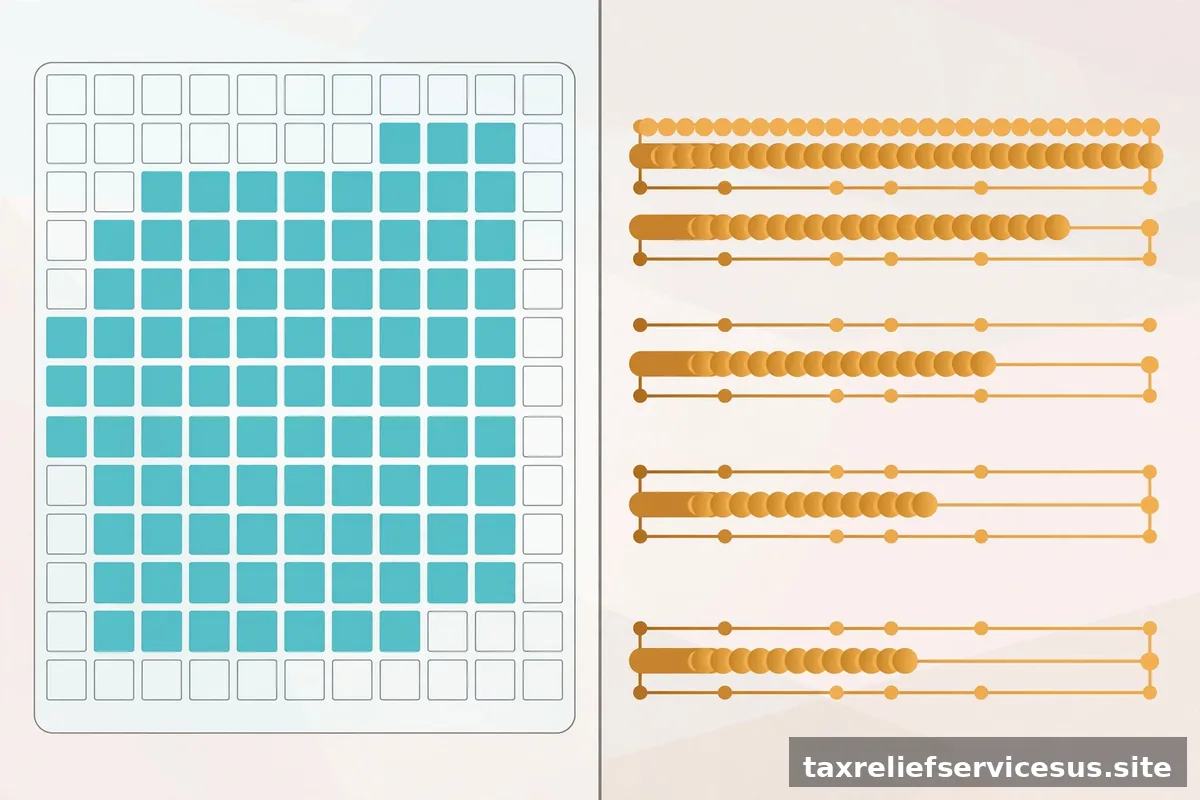
A long-term installment agreement spreads your balance over monthly payments for up to 72 months. This is the workhorse of IRS payment plans — the option most people picture when they hear “payment plan.” You pay a setup fee (lowest when you apply online and use direct debit), and you commit to a monthly amount for years. The Online Payment Agreement application lets you compare options and shows the setup fee before you submit.
The marathon has rules that the sprint does not emphasize as heavily:
- Stay compliant every year. File on time and do not create new balances. A new balance can default the whole agreement.
- Interest and penalties keep accruing for the entire life of the plan. On a 72-month plan, the total cost of the debt can be substantially higher than the original balance.
- You can pay extra or pay off early with no prepayment penalty — and you should, whenever possible.
For the full mechanics of long-term plans, read our installment agreement guide.
The True Cost Comparison
Because interest and penalties accrue under both options, the total cost difference comes down to time and fees. Consider a hypothetical $12,000 balance:
- Short-term (pay in 5 months): no setup fee; roughly five months of accruing interest and penalties on a shrinking balance.
- Long-term (pay over 60 months): setup fee plus five years of accruing interest and penalties on a slowly shrinking balance — the finance charges alone can add thousands.
The math almost always favors paying faster if you can do it without defaulting. A plan you complete beats a plan you abandon. Borrowed money at a lower rate than IRS interest-plus-penalties can even make sense — but run the numbers honestly, because IRS penalties accrue at rates most credit cards would envy.
Which Should You Choose? A Decision Framework
Ask yourself these questions in order:
- Can I pay the full balance within 180 days without missing? If yes — short-term plan. It is free to set up and cheapest overall.
- Is my balance $50,000 or less and payable within 72 months? If yes — streamlined long-term agreement, applied for online with direct debit for the lowest fee.
- Is my balance larger or my budget tighter? Look at non-streamlined agreements, partial payment plans, or alternatives like an offer in compromise or currently-not-collectible status.
- Am I unsure I can sustain any monthly payment? Do not guess — request currently-not-collectible consideration or talk to a tax professional before committing to a plan you might default on.
Can You Switch Lanes Later?
Yes. Taxpayers commonly start with a short-term plan and convert to a long-term agreement if the 180 days prove insufficient, or pay off a long-term plan early when finances improve. Converting usually means a new application and the long-term setup fee. The IRS would rather have you in a sustainable plan than watch you fail in an ambitious one — but communicate before you miss a deadline, not after. Our guide to missed installment payments covers what happens when things go wrong.
Three Taxpayers, Three Choices
Abstract comparisons only go so far. Here is how the decision plays out for three realistic situations:
Maria: $4,200 owed, bonus coming in March
Maria is a marketing manager who under-withheld after a job change. She owes $4,200 and knows a $6,000 annual bonus lands in March — four months away. A short-term plan is the obvious fit: no setup fee, and the bonus wipes the balance before the 180 days expire. She applies online, selects the 180-day option, and sets a calendar reminder for two weeks before the bonus to confirm the payoff amount (which will include a few months of interest and penalties).
James: $18,000 owed, steady income, tight budget
James is a self-employed contractor with two years of underpaid estimated taxes totaling $18,000. His income is steady but his budget has little slack. A short-term plan is fantasy — he cannot produce $18,000 in six months. He applies online for a streamlined long-term agreement at $250/month over 72 months, chooses direct debit for the lowest fee, and — critically — starts making quarterly estimated payments immediately so no new balance forms. He plans to throw extra payments at the balance whenever a good month allows.
The Chens: $9,500 owed, uncertain freelance income
The Chens owe $9,500 from a year when freelance work dried up. Income is recovering but unpredictable. They start with a short-term plan, aiming to clear the balance in five months of aggressive payments. By month four it is clear they will fall short — so they convert to a long-term agreement before the 180 days expire, avoiding default. The conversion costs a setup fee, but it beats the alternative. Their lesson: hope is not a payment strategy, but the system allows course corrections if you act early.
What the Fine Print Says
A few details people discover too late:
- Liens can still be filed. Being in a payment plan does not always prevent the IRS from filing a Notice of Federal Tax Lien, especially on larger balances. A lien protects the government’s interest while you pay.
- Refunds go to the debt. Under either plan, refunds you would otherwise receive are applied to your balance. Many taxpayers are surprised by this the first April after setting up a plan.
- The collection statute keeps running. The IRS generally has 10 years from assessment to collect. Time spent in an installment agreement usually counts toward that clock — one reason the IRS is willing to accept long plans.
- Direct debit has a perk beyond the lower fee: for streamlined agreements, the IRS may not file a lien when you pay by direct debit, depending on your balance. Ask when you apply.
When Neither Plan Fits
Sometimes the honest answer is that no payment plan works — the balance is too large, the budget too tight, or income too uncertain. That is not the end of the road:
- Partial payment installment agreement: you pay what you can each month, and the IRS reviews your finances periodically. If your situation improves, payments increase.
- Offer in compromise: settling for less than the full amount when collection of the full balance is not realistic. See our OIC explainer.
- Currently-not-collectible status: the IRS pauses active collection because paying would cause economic hardship. Penalties and interest still accrue, but levies stop. See how CNC works.
- Penalty abatement first: if penalties are a big chunk of your balance, getting them reduced through penalty abatement or first-time abate can shrink the balance enough to make a plan affordable.
The worst option is doing nothing while the balance grows. Every path above starts with the same first step: face the number, then pick the smallest workable plan.
Frequently Asked Questions
Can I combine multiple tax years into one plan?
Yes. Balances from multiple years are generally rolled into a single installment agreement, which simplifies your monthly payment into one amount.
Do businesses get the same two options?
Businesses have similar options with different balance thresholds — generally lower than the individual limits. Check the IRS business payment plan guidance or consult a tax professional.
Can the setup fee be waived?
Low-income taxpayers may qualify for reduced fees or reimbursement. The IRS publishes income guidelines; if you think you qualify, claim it when you apply rather than afterward.
Disclaimer: General information only, not tax or legal advice. IRS thresholds, fees, and timeframes change; confirm current figures at irs.gov.