The IRS has a program that waives failure-to-file and failure-to-pay penalties for taxpayers with a clean recent history — no hardship story required, no forms, often granted during a single phone call. It is called first-time penalty abatement (FTA), and an astonishing number of eligible taxpayers never ask for it. Tax professionals call it the most underused relief in the code.
This guide covers exactly who qualifies, which penalties it covers, and word-for-word how to request it. General information, not tax or legal advice.
What First-Time Abatement Is
FTA is an administrative waiver — meaning the IRS grants it as a matter of policy, not discretion. If you meet the criteria, approval is essentially routine. It covers:
- Failure-to-file penalties
- Failure-to-pay penalties
- Failure-to-deposit penalties (for businesses, in some circumstances)
It does not cover the estimated tax penalty, accuracy-related penalties, or fraud penalties. And it waives the penalty — the underlying tax and the interest on the tax remain.
The Three-Year Clean History Rule
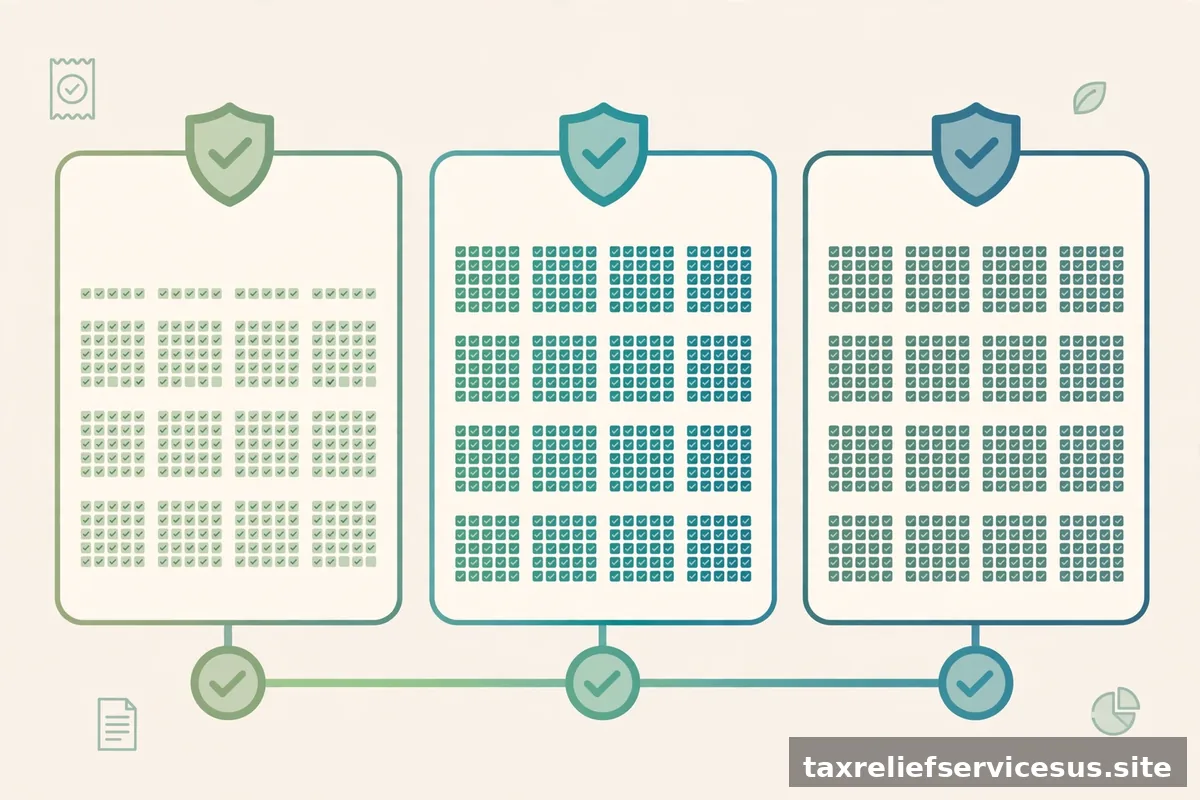
Eligibility hinges on the three tax years before the penalty year. You must show:
- Filed all required returns (or valid extensions) for the prior three years. Every required return — not just the 1040. If you had a filing obligation you missed in any of those years, the chain breaks.
- Paid all tax due for those three years — or are current on an installment agreement covering them. “Paid” includes paying through withholding and timely payments.
- No penalties assessed (except the estimated tax penalty) in those three years. One failure-to-pay penalty in 2023 can block FTA for a 2026 penalty.
The penalty you want abated must also be for a return due within the last three years — FTA is not available for ancient penalties on decade-old returns.
How to Check If You Qualify (Before Calling)
- Pull your IRS account transcripts for the last four years (online at irs.gov or via Form 4506-T). Look for penalty transaction codes in the three prior years.
- Confirm every required return was filed. Missing a year you did not know you had to file (a small side-business return, for example) is the most common surprise disqualifier.
- Confirm the current balance’s penalty type — FTA only covers the three penalty types above.
- If you used an installment agreement in a prior year, confirm it was never in default — a defaulted agreement can break the clean history.
Requesting by Phone: A Script That Works
Call the number on your IRS notice. After identity verification, say something like:
“I’m calling about the failure-to-pay [or failure-to-file] penalty on my [year] account. I’d like to request first-time penalty abatement. I believe I meet the criteria — I’ve filed and paid on time for the prior three years with no prior penalties.”
What happens next:
- The representative checks your history in the system. This takes a few minutes.
- If you qualify, they typically grant it on the spot and tell you the adjusted balance.
- Ask for confirmation: the adjusted amount, and whether a letter will follow (it will — keep it).
- If the representative says you do not qualify, ask specifically why — which year broke the chain? Sometimes it is a correctable issue (a misapplied payment, a return the IRS has but has not processed).
Requesting in Writing
Phone is faster, but written requests (Form 843 or a letter) make sense when:
- The penalty involves multiple years and you want a clean paper trail.
- You were denied by phone and believe the denial was wrong.
- You prefer not to call (the criteria are the same either way).
A written FTA request is simple: identify yourself, the tax periods, the penalty types, state that you meet the FTA criteria (three clean years, no prior penalties), and sign. No hardship narrative needed — that is the beauty of FTA.
After FTA Is Granted
- The penalty — and interest on the penalty — comes off. Your balance drops by the penalty amount plus the interest that had accrued on it.
- Keep the confirmation letter. If the IRS systems ever show the penalty again (rare, but data errors happen), the letter is your proof.
- Protect your new clean history. FTA is renewable — after three more clean years, you could qualify again. Staying compliant keeps the option alive.
- Address the underlying balance. FTA removes penalties, not tax. Set up a payment plan for the remainder if needed.
FTA vs. Reasonable Cause: Which to Try First
Always try FTA first. It requires no documentation of hardship, no narrative, and no judgment call — just a clean history. Reasonable cause (see our full abatement guide) is the backup for taxpayers who do not have three clean years. You can even request reasonable cause as an alternative in the same call: “If I don’t qualify for FTA, I’d like to request abatement for reasonable cause based on…”
FTA for Businesses
Businesses can qualify for FTA on certain penalties, including failure-to-deposit penalties for employment taxes, under similar clean-history rules (the lookback works a bit differently for deposit penalties). Business owners should also know that trust fund penalties have their own landscape — but for straightforward late-deposit penalties with a clean history, FTA is worth the phone call.
Common FTA Mistakes That Waste the Opportunity
- Assuming you do not qualify without checking. Most people underestimate their compliance history. Pull transcripts before concluding — you might be cleaner than you think.
- Leading with a hardship story. Launching into a reasonable-cause narrative when FTA was available wastes everyone’s time and can confuse the representative. Lead with: “I’d like to request first-time abatement.”
- Requesting FTA for the wrong penalty type. Asking for FTA on an estimated tax penalty or accuracy penalty gets an instant no. Know which penalties qualify before you call.
- Not fixing the underlying issue first. If the return still is not filed or the balance is not addressed, some representatives hesitate. File first, then call.
- Accepting the first “no” without asking why. Denials often rest on a specific correctable fact — a misapplied payment, an unprocessed return. Ask, fix, re-request.
- Paying a company for the call. FTA by phone is free. Firms charging $500+ to “negotiate” an administrative waiver are selling you your own phone call. (Legitimate help has its place — see how to vet firms — but not for this.)
Two FTA Case Studies
Nina: the textbook grant
Nina, a teacher, owed $2,100 for 2024 after her divorce changed her withholding. She had filed and paid on time for 2021–2023 with no penalties. She called the IRS, requested first-time abatement for the 2024 failure-to-pay penalty, and the representative granted it during the call — about $180 in penalties plus interest removed. Total time: 25 minutes including hold time. She then set up a short short-term plan for the remaining tax.
Devon: the near-miss
Devon, a freelance designer, requested FTA for 2024 penalties and was denied — a 2022 late-payment penalty broke his clean history. Instead of giving up, he pivoted: his 2024 late filing stemmed from a documented medical emergency, so he submitted a reasonable-cause request with hospital records and got a partial abatement. The lesson: FTA is the first door to try, not the only one. Our abatement guide covers the fallback paths.
The Bigger Picture: Penalties as a Compliance Tool
Step back for a moment: why does the IRS waive penalties for first-timers at all? Because penalties are a compliance tool, not a revenue tool. Their purpose is to change behavior — to make next year’s return timely. A taxpayer with three clean years who slips once does not need behavior change; they need a mulligan. FTA is the system acknowledging that.
This framing helps you use the program wisely:
- Do not “save” FTA for a bigger penalty. There is no prize for hoarding it. If you qualify now, use it now — a future you with three more clean years can qualify again.
- Do treat the grant as a reset, not a reward. The three-year clock restarts. The taxpayers who benefit most from FTA are the ones who pair it with a withholding fix or estimated-payment system so they never need it again.
- Understand what the IRS learns. Requesting FTA signals engagement — you are paying attention to your account. Engaged taxpayers get better outcomes across every IRS program, from payment plans to offers in compromise.
Timing tip: request FTA after the underlying tax is paid in full. Paid-in-full accounts get the smoothest phone approvals, and you stop interest from accruing while you wait for the decision — a double win for a single phone call.
Frequently Asked Questions
I was denied FTA by phone. Now what?
Ask for the specific reason, fix it if fixable (a missing return, a misapplied payment), and call back. If the denial stands, submit a written request or pursue reasonable cause — and you can appeal a denial to the Independent Office of Appeals.
Can I get partial FTA?
FTA is generally all-or-nothing per penalty period: you either meet the criteria or you do not. There is no partial waiver — but reasonable cause can sometimes reduce penalties even when FTA is unavailable.
How often can I use FTA?
There is no lifetime limit. Each new penalty period is evaluated on its own three-year lookback. Stay clean for three years after using it, and you may qualify again.
Do states offer first-time abatement?
Some do, with their own rules — California and New York have penalty-waiver provisions, for example. See our state tax debt guide and check the specific state’s tax agency.
Verify with official sources: confirm current rules, forms, and deadlines via IRS first-time abate administrative waiver and IRS transcripts online — IRS guidance changes, and the official pages are the authority.
Disclaimer: General information only, not tax or legal advice. IRS procedures change; verify current details at irs.gov.