Here is a fact that surprises most taxpayers: a large share of IRS penalties are removable. The failure-to-file and failure-to-pay penalties that inflate so many tax bills can be reduced or eliminated entirely through penalty abatement — if you know the three paths and how to ask. Many people pay penalties they never actually owed, simply because no one told them abatement exists.
This guide covers each path to abatement, who qualifies, and exactly how to request it. General information, not tax or legal advice.
The Penalty Landscape: What You Might Be Paying
Before seeking abatement, understand what is on your bill:
- Failure to file: generally 5% of unpaid tax per month (or partial month), up to 25%. Filed more than 60 days late? A minimum penalty applies (adjusted annually for inflation).
- Failure to pay: generally 0.5% of unpaid tax per month, up to 25%. It drops to 0.25% per month while an installment agreement is in effect.
- Combined months: when both apply in the same month, the combined rate is generally capped at 5% per month.
- Interest accrues on both the tax and the penalties — and interest generally cannot be abated except in narrow circumstances.
See our failure-to-file vs. failure-to-pay comparison for which penalty hurts more in different situations.
Path 1: First-Time Penalty Abatement (FTA)
The easiest path — and the most overlooked. If you have a clean compliance history, the IRS will typically waive failure-to-file and failure-to-pay penalties administratively, no tragic story required. The usual conditions:
- You filed (or filed an extension for) all required returns for the prior three years.
- You paid (or arranged to pay) all tax due for those years.
- You have no prior penalties (other than estimated tax penalties) in those three years.
- The current penalty stems from a return due within the last three years.
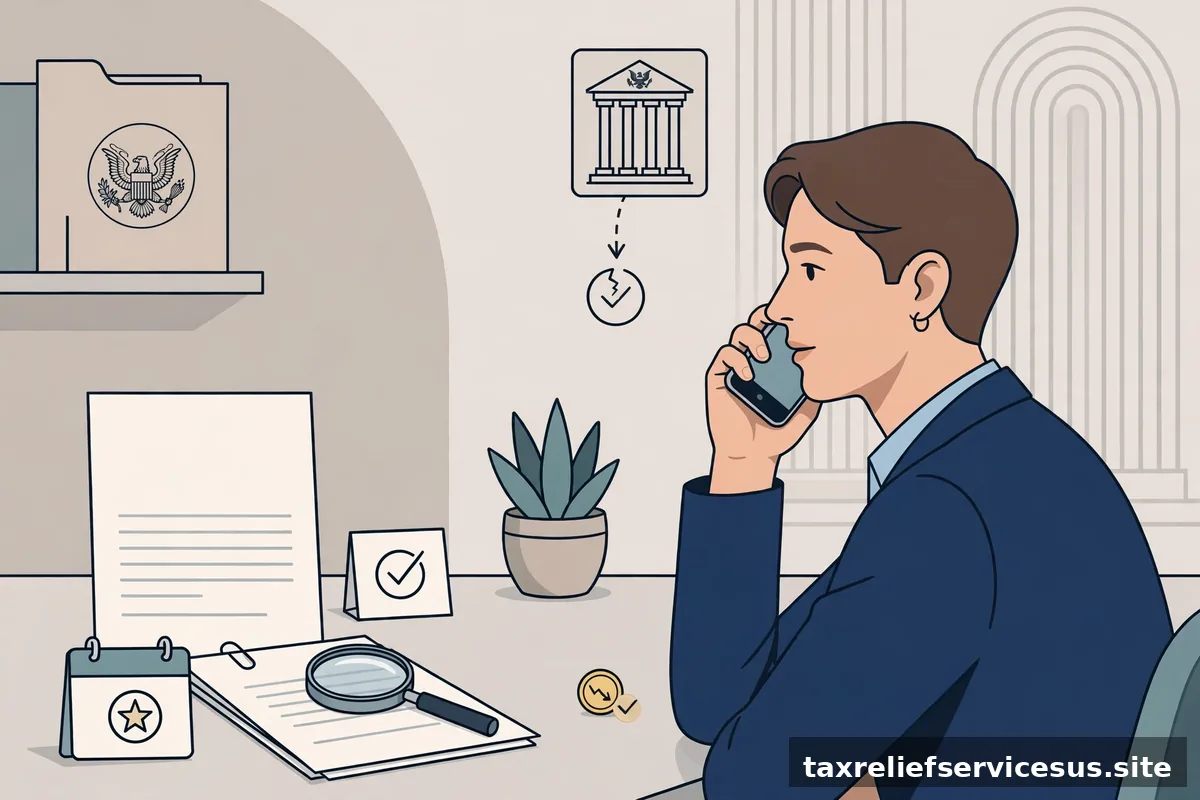
FTA can be requested by phone — one call, often granted on the spot — or in writing. Many taxpayers (and some professionals) skip straight to complicated reasonable-cause arguments when FTA was available all along. Our dedicated first-time abatement guide walks through it in detail.
Path 2: Reasonable Cause
If you do not qualify for FTA, reasonable cause is the main alternative. You must show you exercised ordinary business care and prudence but still could not comply, due to circumstances beyond your control. The IRS considers:
- Death or serious illness of the taxpayer or an immediate family member.
- Natural disaster, fire, or casualty that destroyed records or prevented filing.
- Inability to obtain records despite reasonable efforts.
- Reliance on professional advice — but only if you gave the advisor complete information and the advice was specific (a vague “my accountant handles it” rarely suffices).
- IRS errors — bad written advice from the IRS, for example.
What does not count: “I forgot,” “I could not afford to pay” (inability to pay is not reasonable cause for failure to file, though it can matter for failure to pay in some analyses), or ignorance of the law. Documentation wins these cases — medical records, insurance claims, correspondence. Write a clear timeline connecting the event to the missed deadline.
Path 3: Statutory Exceptions and Administrative Waivers
Beyond FTA and reasonable cause, specific provisions waive penalties in defined situations — disaster-area postponements, military combat-zone extensions, and certain erroneous-advice scenarios. If your situation touches one of these categories, say so explicitly and cite the provision; examiners apply them more readily when the taxpayer names the rule.
How to Request Abatement: The Mechanics
- Start with FTA by phone if you might qualify — it is the fastest path. Call the number on your notice, reference the penalty periods, and ask specifically for first-time abatement.
- Put reasonable-cause requests in writing using Form 843, Claim for Refund and Request for Abatement, or a signed letter with: your name, SSN/ITIN, tax periods, penalty types, the facts establishing reasonable cause, and supporting documents.
- Be specific about dates. “I was hospitalized” is weak; “I was hospitalized March 3–28, the return was due April 15, and I filed May 2 upon discharge — see attached records” is strong.
- Request each penalty period separately. Abatement is granted per period; a blanket “remove all penalties” without period-by-period facts gets denied.
- If denied, appeal. You can take a denied abatement request to the Independent Office of Appeals. Many reasonable-cause cases succeed on appeal after a first-level denial.

Strategic Notes Most Guides Skip
- Abate before you settle. If you are considering an offer in compromise or a payment plan, successful abatement shrinks the balance first — lowering your offer amount or monthly payment.
- FTA is once-per-clean-period, not once-per-lifetime. After three clean years, you may qualify again. It is a renewable benefit of staying compliant.
- Interest on abated penalties is also removed — the interest that accrued on the penalty goes away with the penalty itself. (Interest on the underlying tax remains.)
- Businesses can qualify too — FTA and reasonable cause apply to business penalties like late employment-tax deposits, with their own compliance-history rules.
- Do not pay a firm thousands for a phone call. FTA by phone is free and takes minutes. See how to vet tax relief companies before hiring anyone for abatement work.
Anatomy of a Strong Abatement Request Letter
Whether you use Form 843 or a plain letter, the structure that works looks like this:
- Header: your name, SSN/ITIN, address, tax periods at issue, and the specific penalties you are asking to abate.
- Opening paragraph: state exactly what you want — “I request abatement of the failure-to-file and failure-to-pay penalties for tax year 2023 under [first-time abatement / reasonable cause].”
- Facts section: a dated timeline. “The return was due April 15, 2024. On March 10, 2024, I was hospitalized (see attached discharge summary). I filed on May 30, 2024, within six weeks of discharge.” Every claim tied to a date, every date tied to a document.
- Argument section: connect facts to the standard. “These facts establish reasonable cause because I exercised ordinary business care — I had prepared the return in February — but a medical emergency beyond my control prevented filing.”
- Compliance statement: “I have since filed all required returns and am current on estimated payments for the current year.”
- Closing: list of enclosures, your signature, date, and phone number.
Keep it to two pages plus attachments. Examiners process hundreds of these; clarity and brevity are competitive advantages.
When to Handle It Yourself vs. Hire Help
- DIY: first-time abatement by phone; straightforward reasonable-cause cases with clean documentation; single-year issues with small balances.
- Consider help: multi-year reasonable-cause cases; business penalties; cases already denied once (appeals have procedures worth navigating with experience); balances large enough that the fee is small relative to the penalties at stake.
- If you hire: a CPA, enrolled agent, or tax attorney — not a sales-driven “relief” firm. Verify credentials, get a flat fee in writing, and never sign over power of attorney to someone you have not vetted. See choosing a tax relief company.
Fitting Abatement Into Your Overall Strategy
Penalty abatement is rarely the whole solution — it is a force multiplier for one. Think of it as step zero:
- Before an installment agreement: abate first, and your monthly payment drops — sometimes enough to move you into a streamlined tier or a shorter term.
- Before an offer in compromise: every dollar of penalties removed is a dollar off your RCP floor and your offer amount.
- Before CNC: abatement does not change hardship math much, but a smaller balance means a shorter path out the other side.
- After paying in full: yes, you can still request abatement of penalties you already paid and get a refund — within refund-claim time limits. Many people leave this money on the table forever.
The sequence matters because abatement is cheapest (often free) and fastest (sometimes same-day by phone). Always ask “can these penalties come off?” before committing to any plan built around the gross balance. Taxpayers who skip this step routinely overpay by hundreds or thousands of dollars — money that was theirs to keep all along.
Put these moves on a calendar: our year-end tax debt checklist walks through everything to do before December 31.
Frequently Asked Questions
Can interest be abated too?
Generally no — interest is statutory and the IRS has very limited authority to abate it. The exceptions are narrow (such as IRS unreasonable delay in specific situations). Focus abatement efforts on penalties, where the IRS has real discretion.
I already paid the penalties. Can I still get abatement?
Yes — you can request abatement and a refund of penalties already paid, within the normal refund claim time limits. Do not assume paying means accepting.
How long does a written abatement request take?
Weeks to several months depending on complexity and backlog. Phone FTA, by contrast, is often resolved during the call.
Does FTA cover estimated tax penalties?
No — the estimated tax penalty is technically an addition to tax with its own waiver rules (including exceptions for retirees, farmers, and casualty situations). It is not eligible for first-time abatement.
Can I get abatement for multiple years at once?
Yes, but each year is evaluated separately — you need qualifying facts for each period. FTA is the exception that can sweep several years at once, provided all three prior years were clean. For reasonable cause, prepare a timeline per year; what explains 2022 may not explain 2023.
Official IRS guidance: irs.gov — Penalty relief. Bookmark it; you will want it when you call.
Disclaimer: General information only, not tax or legal advice. Penalty rates and procedures change; verify current details at irs.gov or consult a qualified tax professional.