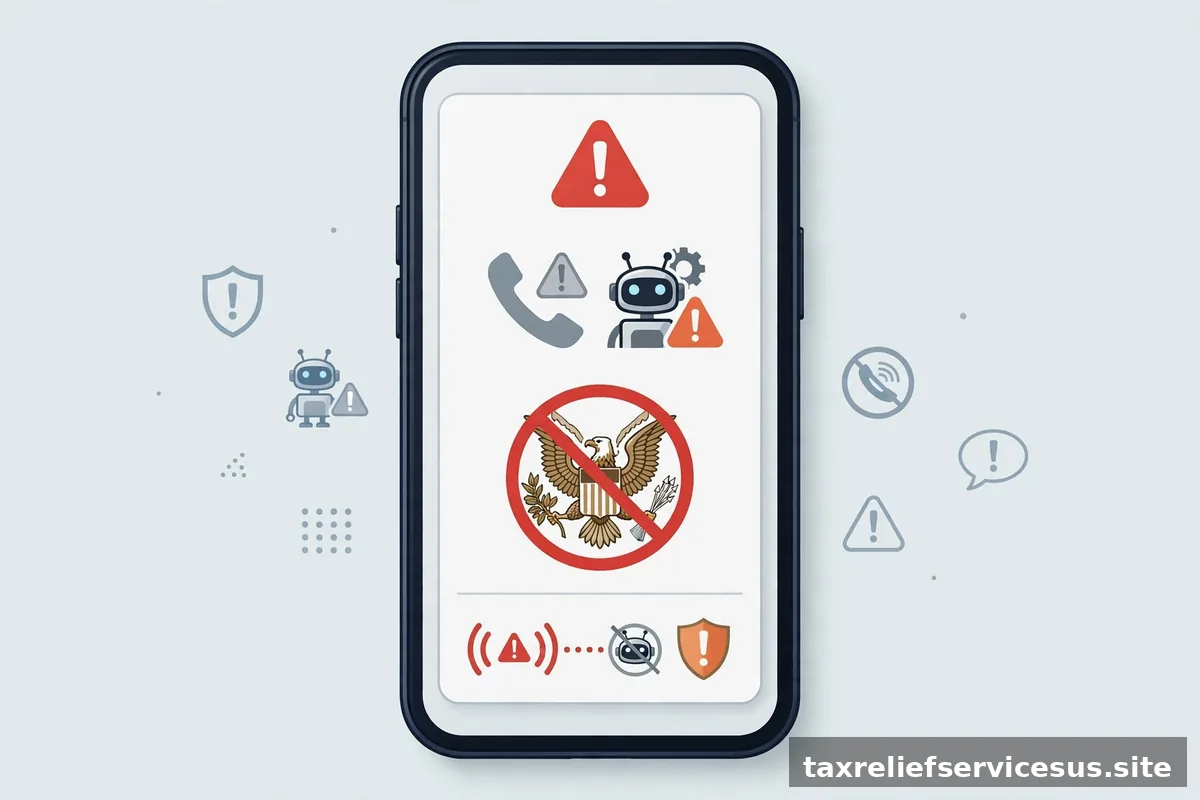
Owing the IRS money puts you on a list — not an official one, but a psychological one. You are stressed, you are hoping for relief, and you are primed to believe someone offering it. Fraudsters know this. Tax-related scams cost Americans enormous sums every year, and the schemes targeting people with tax debt are among the most sophisticated — because the scammers study the real IRS the way counterfeiters study currency.
This guide maps the current scam landscape: how each scheme works, the tells that expose it, and concrete defenses. We describe patterns, not specific perpetrators. General information, not legal advice.
Why Tax Debt Makes You a Target
Scammers are rational predators — they go where the vulnerability is. Tax debt creates a perfect storm:
- Authority bias: the IRS is scary, so “the IRS called” short-circuits skepticism.
- Complexity: few people understand tax procedure, so plausible-sounding lies pass unchallenged.
- Shame and secrecy: victims often hide tax problems from family, removing the second pair of eyes that would catch the scam.
- Urgency: real IRS deadlines exist, so fake urgency (“act in 24 hours!”) feels plausible.
- Hope: the promise of settling for “pennies on the dollar” is exactly what a desperate person wants to hear.
Understanding that you are targeted because of these factors — not because you did anything wrong — is the first defense. Vigilance is not paranoia here; it is appropriate.
Scam 1: IRS Impersonation Calls and Robocalls
The classic, still thriving. You get a call — increasingly with AI-cloned voices — claiming to be the IRS: you owe back taxes, a warrant will be issued, police are coming, pay immediately via gift cards, wire transfer, or cryptocurrency.
The tells: the IRS initiates contact by mail, never by phone call demanding immediate payment. The IRS never demands gift cards, wire transfers, or crypto. Threats of immediate arrest are theater — real collection follows a documented notice process (CP14 → CP501 → CP503 → CP504) with appeal rights at every stage.
Defense: hang up. Do not engage, do not “verify” your SSN, do not call back the number they give you. If worried, check your actual balance via your IRS online account or call the IRS at its published number.
Scam 2: Fake IRS Websites and Phishing
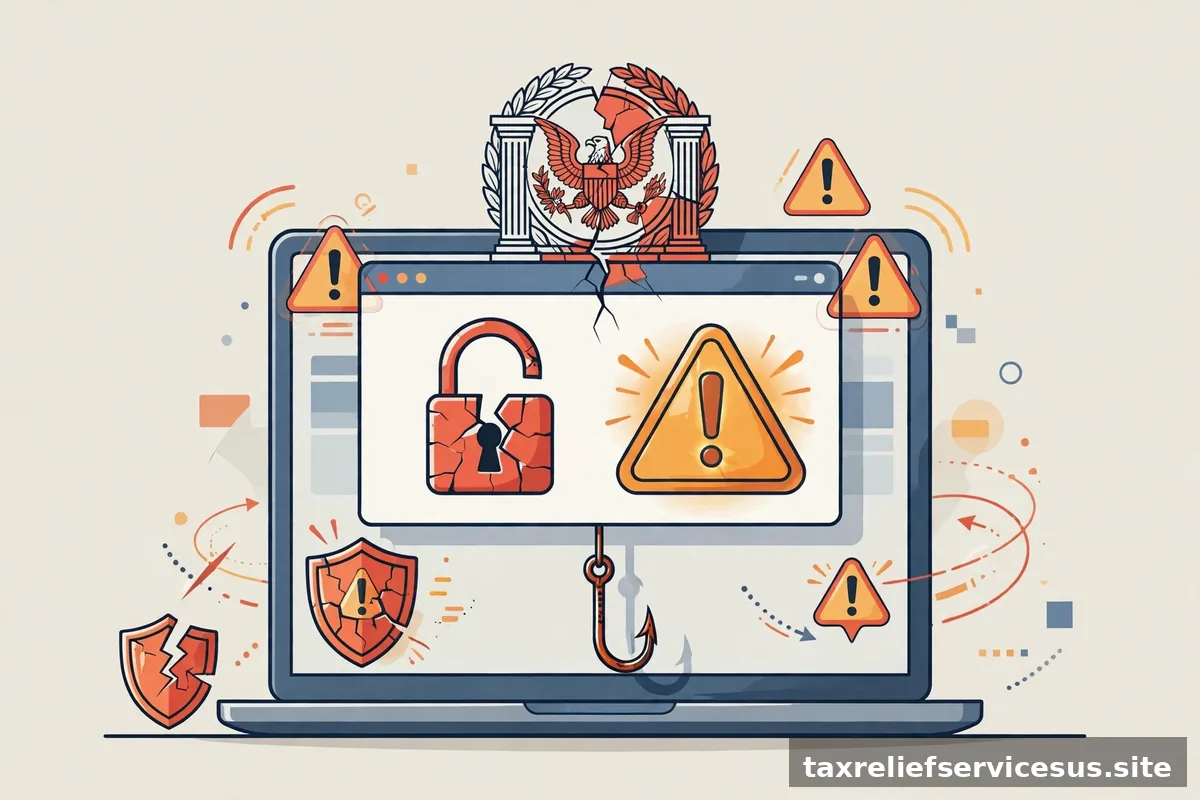
Lookalike domains (irs-gov.com, irs-payments.net), phishing emails about “refunds” or “relief eligibility,” and text messages with links — all designed to harvest Social Security numbers and bank credentials.
The tells: the real IRS website is exactly irs.gov — check the domain character by character. The IRS does not send text messages with links or initiate contact via email about your account. Hover over links before clicking; check sender addresses for subtle misspellings.
Defense: never enter your SSN after following a link — navigate to irs.gov yourself. Forward phishing emails to phishing@irs.gov. Enable two-factor authentication on your IRS online account.
Scam 3: Social Media “Tax Hackers”
A booming category: influencers and ads promising to “eliminate” tax debt with secret methods — offshore structures, constitutional arguments (“taxation is voluntary”), fake business losses, or “IRS loopholes they don’t want you to know.” Some sell courses; some sell “done for you” fraud.
The tells: secret methods, constitutional theories about taxation (courts have rejected them all, consistently, for decades), promises with no mention of OIC math or installment rules, and a business model based on selling you something rather than resolving anything.
Defense: if the method is not described on irs.gov, it is not real. Participating in abusive tax schemes can bring penalties far worse than the original debt — including accuracy penalties of 20–40% and potential criminal exposure. The IRS publishes an annual “Dirty Dozen” list of tax scams; check it.
Scam 4: The “Tax Relief Company” Front
Some scam operations wear the mask of legitimacy: professional websites, 800 numbers, “case managers.” The model: collect large upfront fees, file little or nothing, stall with excuses, and disappear or rebrand when complaints mount. Our 12 red flags guide is the full field manual — the brightest flags being guaranteed outcomes, no licensed professional, and percentage-based fees.
Defense: run the vetting process — credential verification, complaint searches, written fee agreement — before paying anything. Legitimate firms survive scrutiny; scams do not.

Scam 5: Refund and Identity Theft Schemes
Adjacent but worth knowing: criminals file fraudulent returns in your name to steal refunds, or trick you into “verifying” identity so they can. If you owe taxes, you might assume a refund notice is a mistake in your favor — it may be identity theft using your SSN.
Defense: file early each year (beats criminals to it), get an IRS Identity Protection PIN (IP PIN) — a six-digit number that prevents others from filing with your SSN — and check your transcripts annually for returns you did not file.
Anatomy of a Scam Call: The Script, Decoded
Scam calls follow scripts because scripts work. Here is a typical IRS-impersonation call decoded, so you recognize the machinery:
The opener — false authority: “This is Officer [name] from the IRS Criminal Investigation Division, badge number [number].” Real IRS employees do not cold-call taxpayers, and badge numbers are theater — there is no way for you to verify one mid-call, which is the point.
The hook — manufactured debt: “Our records show you owe $4,832 in back taxes from 2021–2023.” The amount sounds specific (specificity feels credible), and the years are plausible. They may even have your name and address from data breaches — stolen personal data does not make them legitimate.
The pressure — fake urgency: “A warrant will be issued within 45 minutes if this is not resolved.” The time pressure is deliberate: it prevents you from thinking, googling, or calling anyone. Real IRS collection measures in months and arrives by mail.
The pivot — isolation: “Do not hang up. Do not call anyone. Stay on the line while you go to the store.” Keeping you on the phone prevents the single most effective defense: a second opinion.
The close — irreversible payment: gift cards, wire transfers, cryptocurrency, or payment apps — methods with no buyer protection and no reversibility. The IRS accepts checks, direct pay from bank accounts, and card payments through official channels. It has never accepted iTunes gift cards.
Once you see the five-act structure, every variant becomes recognizable — because they all use it. Save this page; the next suspicious call you get will play out exactly this way.
Building Your Personal Scam Firewall
- Rule 1: the IRS mails first. Any tax contact that did not begin with a mailed notice is suspect until proven otherwise. This single rule defeats most impersonation scams.
- Rule 2: hang up and call back. Never continue a suspicious call. Look up the official number yourself (irs.gov/contact) and call it. Legitimate matters survive a callback; scams do not.
- Rule 3: no irreversible payments. Gift cards, wire transfers, crypto, and cash apps for a “tax debt” = scam, full stop. No exceptions.
- Rule 4: verify independently. Check your IRS online account for actual balances. If the caller says you owe $5,000 and your account shows $0, the question answers itself.
- Rule 5: slow down. Urgency is the scammer’s weapon. “I need to verify this independently — I’ll call back” is always the right move, and anyone legitimate will accept it.
- Rule 6: talk to someone. Tell a family member, a friend, your tax preparer — anyone. Scams depend on your silence; conversation is kryptonite.
If You Have Been Targeted (or Victimized)
- Report impersonation scams to the Treasury Inspector General for Tax Administration (TIGTA) and the FTC at ReportFraud.ftc.gov.
- Report phishing to phishing@irs.gov.
- If you paid a scammer: contact your bank or card issuer immediately about reversing the payment; file a police report; place fraud alerts with the credit bureaus.
- If you shared your SSN: get an IP PIN, file Form 14039 (Identity Theft Affidavit) with the IRS, and monitor your transcripts.
- If you signed with a fraudulent “relief” firm: revoke any power of attorney, demand your file, dispute fees, and complain to the FTC and your state attorney general.
- Tell someone. Shame keeps victims silent and scammers safe. Talk to family, and consider reporting even if you caught it in time — your report protects the next target.
Protecting Family Members
Elderly relatives are prime targets. Have the conversation before a crisis: explain that the IRS mails first, never demands gift cards, and that any “tax relief” caller should be hung up on and discussed with family. Offer to be the designated researcher for any tax matter — scammers rely on isolation, and your involvement breaks it. Consider setting up transaction alerts on elderly relatives’ accounts (with permission) to catch unusual payments early.
Frequently Asked Questions
How do I know if an IRS call is real?
The IRS rarely calls out of the blue — and when it does (after extensive mailed correspondence), it never demands immediate payment by unusual methods. If in doubt, hang up and call the IRS back at its published number, or check your online account.
I already paid a suspicious company. Is the money gone?
Not necessarily. Credit card chargebacks (if recent), bank reversals for transfers, state AG complaint processes, and small claims court all offer paths. Act within days, not months — and report regardless of recovery.
What is an IP PIN and should I get one?
An Identity Protection PIN is a six-digit number the IRS issues you; it must be included on your return, preventing criminals from filing with your SSN. Anyone can request one, and if you have been targeted, you should.
Verify with official sources: confirm current rules, forms, and deadlines via IRS Dirty Dozen tax scams list and IRS Identity Protection PIN — IRS guidance changes, and the official pages are the authority.
Disclaimer: General information only, not legal advice. Report suspected tax scams to TIGTA and the FTC.