You check your bank balance and it is wrong — frozen, or suddenly much smaller. An IRS bank levy has hit. Unlike a wage levy that bleeds each paycheck, a bank levy is a one-time seizure with a brutal twist: the bank must hold your funds for 21 days, then send them to the IRS. Those 21 days are your window to get the money back.
This guide explains the bank levy timeline, which funds have protection, and exactly what to do in those 21 days. General information, not tax or legal advice — and if a levy just hit, treat this as urgent reading.
How a Bank Levy Works
The IRS sends a levy notice to your bank. The bank is legally required to comply:
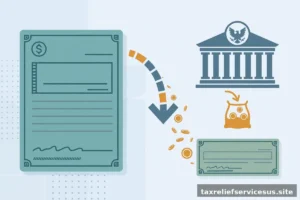
- Day 0: the bank receives the levy and freezes the funds in your account(s) up to the amount owed. You cannot withdraw, transfer, or spend the frozen amount.
- Days 1–21: the holding period. The money sits frozen — still technically yours, but inaccessible. This is your action window.
- Day 21: if the levy has not been released, the bank sends the funds to the IRS. After that, recovery is far harder (though not always impossible).
Critical nuances:
- The levy captures only what is in the account when the bank processes it — future deposits are generally not captured (unlike wage levies, bank levies are one-shot; the IRS must issue a new levy for new funds).
- It can hit multiple accounts and banks — the IRS may levy every institution where you hold accounts.
- Business accounts, savings, and money market accounts can all be levied.
The IRS Must Warn You First
Like wage levies, bank levies require the notice sequence: CP14 → CP501 → CP503 → CP504/LT11 with CDP appeal rights. If the IRS skipped required notices, the levy may be procedurally defective — a point to raise immediately when you contact them or in a CDP hearing. Keep every notice; the timeline matters. You exercise those rights with Form 12153, due within 30 days of the final notice.
Are Any Funds Protected?
Some funds have partial protections, but the landscape is narrower than people hope:
- Social Security benefits have special treatment under the Federal Payment Levy Program (generally limited to 15% of the benefit for federal tax debts) — but commingled funds in a levied bank account create practical complications. Direct-deposit Social Security into an account and the tracing gets murky; consult a professional if this is your situation.
- Certain exempt amounts apply in some levy contexts, but bank levies are primarily governed by the 21-day hold and release procedures rather than ongoing exemptions.
- Joint accounts: the IRS can levy a joint account for one spouse’s separate tax debt, though the non-debtor spouse has rights to claim their portion. This gets complicated fast — get help.
- No, “it was earmarked for rent” is not a legal protection — but economic hardship is grounds for release (see below). The distinction matters: the law protects categories of funds narrowly, but gives the IRS discretion to release levies causing hardship.
Your 21-Day Action Plan
Days 1–2: Assess and contact.
- Confirm it is an IRS levy (not a creditor garnishment or bank error) — check for IRS notices and call the IRS.
- Calculate exactly what you need the frozen funds for: rent/mortgage due dates, payroll if self-employed, medical needs.
- Contact the IRS immediately — by phone, today. Explain the hardship with specifics and dates.
Days 3–7: Formalize the alternative.
- Propose the arrangement that resolves the underlying debt: installment agreement, CNC/hardship claim, or OIC as appropriate.
- Submit any financial documentation requested (Form 433 series) promptly — delays kill release requests.
- If you have a tax professional, loop them in now; if not, consider one for the emergency.
Days 8–21: Escalate if stalled.
- Request a CDP hearing if you are within the window — it suspends collection.
- Contact the Taxpayer Advocate Service if you face immediate economic harm and normal channels are not moving fast enough.
- Document every call: date, representative name/ID, what was agreed.
Getting a Levy Released for Hardship
The IRS must release a levy if it determines the levy is causing economic hardship — meaning you cannot meet necessary living expenses. To win a hardship release:
- Document the math: income versus necessary expenses (use the IRS’s own allowable-expense standards as your framework).
- Show immediacy: rent due Friday, payroll Wednesday, insulin refill now — concrete dates beat general complaints.
- Propose the path forward: hardship release is easier to grant when paired with an arrangement (payment plan, CNC) addressing the debt itself.
- Be persistent and polite: frontline representatives have discretion; supervisors have more. Escalate calmly if the first answer is no.

What the Bank Does (and Doesn’t Do)
Understanding the bank’s role prevents wasted effort and misplaced anger:
- The bank must comply. A federal tax levy is a legal order; the bank has no discretion to ignore it and no obligation to warn you first. Being angry at your bank is understandable but unproductive — the dispute is with the IRS, not the institution.
- The bank will not negotiate for you. Tellers and branch managers cannot release a levy, reduce it, or call the IRS on your behalf. Only the IRS (or the Tax Court, in narrow circumstances) can release it.
- Fees may apply. Some banks charge a levy processing fee on top of everything else. Ask about it — and factor it into your hardship math.
- Direct deposits during the freeze: your paycheck may still arrive during the 21 days. Whether new deposits are captured depends on timing and the levy’s terms — the levy generally attaches to funds present when processed, but banks handle this differently. Ask the bank specifically, in writing.
- The bank’s notice to you often arrives after the freeze — sometimes days later. If your balance looks wrong, call the bank immediately and ask directly: “Is there a levy on my account?”
The Taxpayer Advocate Service: Your Emergency Lever
The Taxpayer Advocate Service (TAS) is an independent organization within the IRS that helps taxpayers facing economic harm who have not been able to resolve problems through normal channels. For bank levies causing immediate hardship, TAS can be the fastest path to relief:
- When to contact TAS: you face immediate economic harm (rent due, payroll, medical), and normal IRS channels are too slow or unresponsive. A bank levy freezing your operating funds is a textbook TAS case.
- How to reach them: taxpayeradvocate.irs.gov or the TAS intake line. Every state has at least one local TAS office.
- What to prepare: your hardship documentation (the same income/expense math as the IRS release request), the levy notice details, and a record of your attempts through normal channels.
- What TAS can do: issue a Taxpayer Assistance Order directing the IRS to release the levy or take other action — an authority normal representatives do not have.
- It is free. Like the Low Income Taxpayer Clinics, TAS exists precisely for situations like this. Use it.
TAS is not a shortcut around the normal process — it is the safety valve for when the normal process cannot move fast enough. In a 21-day window, that distinction matters enormously.
If the 21 Days Expire
Once funds are sent to the IRS, they are applied to your debt — which does reduce what you owe. Recovery of the money itself becomes much harder, but not always impossible:
- You can still request the underlying debt be reconsidered (audit reconsideration, OIC, penalty abatement) — future relief, not past recovery.
- Wrongful-levy claims exist for narrow situations (e.g., the funds were not actually yours).
- The practical lesson: the 21-day window is everything. Treat a bank levy like the emergency it is — same-day action, not next-week action.
Preventing the Next Levy
- Resolve the underlying debt — a released levy without a plan invites the next one. The IRS can issue successive bank levies.
- Stay compliant: file on time, pay current taxes. See how to protect a payment plan.
- Consider where you bank: spreading funds across institutions does not prevent levies (the IRS finds accounts), but understanding the one-shot nature helps you plan — a wage levy (see our guide) is continuous; bank levies are episodic.
- Open your mail. The notice sequence is the early-warning system. Every levy in this guide was preceded by months of warnings.
Frequently Asked Questions
Can the IRS levy all my bank accounts at once?
Yes — the IRS can issue levies to multiple financial institutions simultaneously. Each levy is one-shot per account, but coordinated levies can freeze everything at once.
Can business accounts be levied?
Yes. Business bank accounts are levy targets, and for payroll tax debts the IRS moves especially fast. Business owners should treat any balance-due notice as urgent.
What about cryptocurrency or payment apps?
The IRS has expanded its reach to digital assets and third-party payment platforms. Do not assume funds are “hidden” anywhere — and attempting to hide assets can create criminal exposure far worse than the tax debt.
Bank levy vs. wage levy — which is worse?
Different pain: bank levies seize a lump sum with a 21-day recovery window; wage levies bleed every paycheck continuously. See our wage garnishment guide and lien vs. levy comparison.
Can I get a partial release — just enough for rent?
Sometimes. The IRS can release part of a levy while holding the rest, especially when you document a specific imminent expense (rent due Friday, payroll Wednesday). Ask explicitly for partial release tied to the documented need — it is a recognized outcome, not a favor.
Disclaimer: General information only, not tax or legal advice. A bank levy is time-critical — contact the IRS or a tax professional immediately.