
There is a status in the IRS system for people who genuinely cannot pay: currently not collectible (CNC) — sometimes called “Status 53.” It does not erase your debt. But it stops enforced collection — no levies, no garnishments — for as long as your financial situation qualifies. For people in genuine hardship, it is the difference between survival and ruin.
This guide explains the qualification math, how to request CNC, what it costs, and the traps. General information, not tax or legal advice.
What CNC Status Actually Does
- Pauses enforced collection: the IRS will not levy your wages or bank accounts while CNC is in effect.
- Does not stop the debt from growing: penalties and interest continue to accrue. CNC is a pause, not forgiveness.
- Does not remove liens: a filed Notice of Federal Tax Lien generally stays in place.
- Applies your refunds: any tax refunds you would receive are applied to the debt instead.
- Is temporary and reviewed: the IRS reviews CNC accounts periodically (often annually) — if your income improves, collection resumes.
- Does not stop the 10-year clock: the collection statute keeps running, which is strategically significant (see below).
The Qualification Math
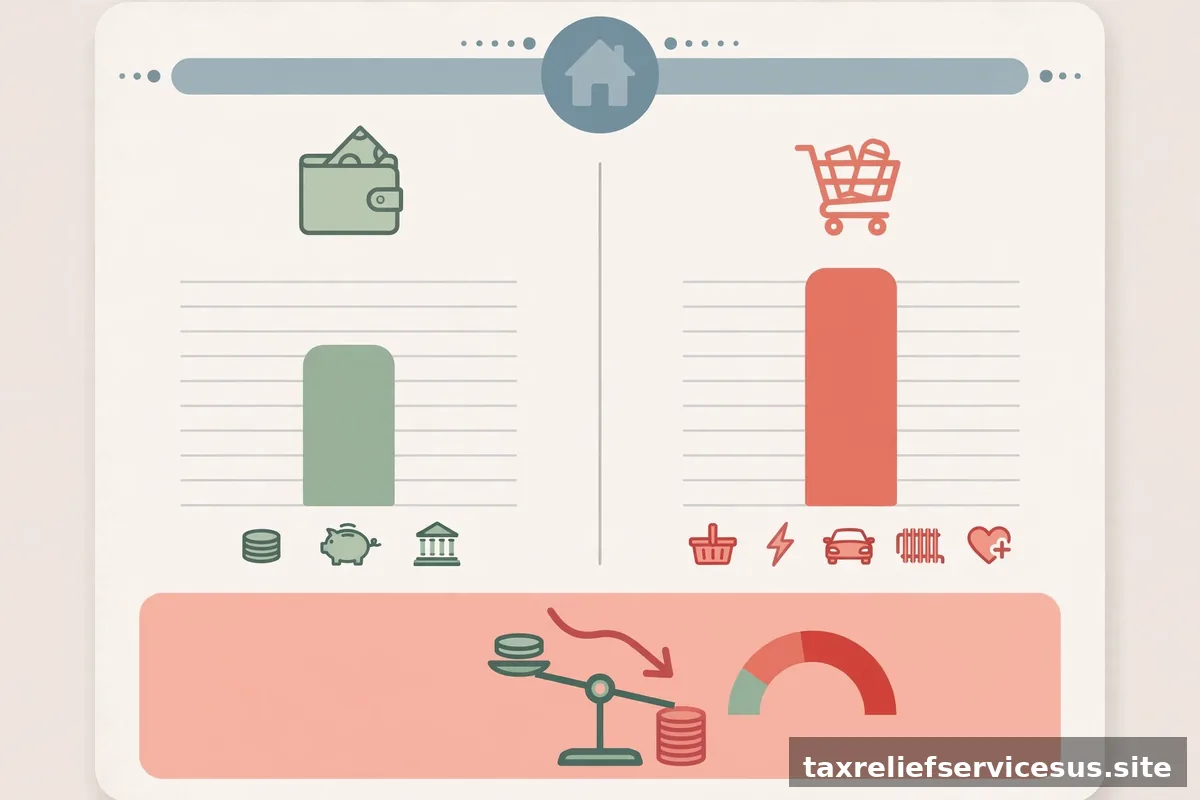
CNC is granted when your necessary living expenses meet or exceed your income — paying the IRS would leave you unable to cover basics. The IRS uses national and local Collection Financial Standards (published allowable amounts for housing, transportation, food, health care, etc.) as the framework — not your actual spending.
This creates two scenarios:
- Income below standards: if your income is already below the allowable living expenses, qualification is straightforward — the math speaks for itself.
- Income above standards: you must document why your actual necessary expenses exceed the standards (high medical costs, court-ordered payments, care obligations). Harder, but winnable with documentation.
Common disqualifiers: unfiled tax returns (file everything first — always), dissipated assets (the IRS looks dimly on luxury spending while claiming hardship), and income the IRS believes is understated.
How to Request CNC Status
- File all required returns. Non-negotiable — the IRS will not consider CNC with missing returns.
- Complete a Collection Information Statement — Form 433-F (individuals) or 433-B (businesses). This is the income/expense/asset disclosure the decision rests on.
- Gather documentation: pay stubs, bank statements, rent/mortgage statements, medical bills, and anything supporting expenses above standards.
- Contact the IRS — by phone (expect a long hold; the financial statement interview happens with a representative) or through a tax professional.
- If denied, appeal: you can request a CDP hearing or use the Collection Appeals Program. Denials based on misapplied standards are appealable — and winnable.
The Strategic Value: CNC and the 10-Year Clock
Here is what makes CNC strategically interesting: the 10-year collection statute (CSED) keeps running during CNC. If your financial situation does not improve and the statute expires, the debt becomes uncollectible permanently. CNC is not designed as a waiting game — but for taxpayers whose hardship is long-term (disability, fixed retirement income, chronic illness), the math can resolve the debt through expiration.
Caveats: certain actions extend the statute (installment agreements, OICs, bankruptcy, living abroad). And betting on a decade of continued hardship is not a plan — it is a circumstance. But understanding the clock helps you make informed decisions.
The 433-F Line by Line: What They’re Really Asking
Form 433-F (Collection Information Statement) is the document your CNC case turns on. Understanding what each section is really asking helps you answer completely and accurately:
- Income section: every source — wages, self-employment, Social Security, pensions, rental income, contributions from others. The IRS cross-references information returns (W-2s, 1099s), so omissions are discovered, not overlooked. Report everything.
- Living expenses: housing, food, transportation, health care, child care. Answer with actual amounts — the IRS then compares them to the Collection Financial Standards. Where your actual necessary expenses exceed standards, documentation (bills, receipts, court orders) is what wins the argument.
- Assets: bank accounts, investments, real estate, vehicles. The IRS is assessing whether you could borrow against or liquidate assets to pay. A paid-off boat while claiming hardship is a bad look; a 12-year-old car you need for work is not an issue.
- The signature: signed under penalties of perjury. Accuracy is not optional — misstatements can torpedo the case and create separate problems.
Preparation tip: complete a draft 433-F before calling the IRS, with documentation organized by line. Representatives handle these interviews all day; the callers who get smooth approvals are the ones who answer each question with a number and a document ready.
Life in CNC: A Year in the Life
What does CNC status actually feel like, month to month?
- Month 1–2: relief. Levies released, collection letters stop. Breathe — then immediately fix withholding so you stop overpaying into seized refunds.
- Ongoing: file every return on time, pay all current taxes. This is the prime directive — new balances endanger everything.
- Tax season: your refund is applied to the old debt. Expect it, plan for it, do not count on refund money for bills.
- The annual review: the IRS sends a notice requesting updated financials. Respond promptly and completely — silence reads as “situation improved.”
- If income improves: report it proactively. Graduating from CNC into an installment agreement on your own terms beats having collection restart by surprise.
- Throughout: penalties and interest accrue on the underlying debt. CNC is shelter, not settlement — keep the long-term picture (the 10-year clock, potential OIC later) in mind.
CNC done right is uneventful — and uneventful is the goal. The taxpayers who struggle in CNC are the ones who treat it as permanent permission to ignore taxes rather than as protected time to stabilize.
CNC Traps to Avoid
- The refund trap: refunds are seized and applied to the debt every year. Adjust withholding so you break even instead of overpaying — do not lend the IRS money interest-free while in CNC.
- The compliance trap: you must stay current on all future tax obligations — file on time, pay current taxes. New balances can blow up CNC status.
- The review trap: when the IRS reviews (often annually), be ready with updated financials. Miss the review and collection can restart by default.
- The “I’m safe forever” trap: CNC is reviewed and reversible. Income improvements — a new job, an inheritance, a spouse’s income change — end it.
- The lien trap: CNC does not remove filed liens. If you need to sell property, address the lien separately (discharge/subordination).
CNC vs. the Alternatives
- vs. installment agreement: if you can afford even a small monthly payment, an agreement may be better — it shows good faith, and in some cases can lead to lien withdrawal. CNC is for when you genuinely cannot pay anything.
- vs. offer in compromise: OIC settles the debt for less but requires a lump sum or short-term payments you may not have. CNC requires no payment at all — but leaves the full debt (plus accruals) in place.
- vs. bankruptcy: some tax debts are dischargeable in bankruptcy; CNC is not a discharge. Different tools for different situations — get professional advice if both are on the table.
- vs. doing nothing: CNC is infinitely better than ignoring the debt. Ignoring it brings levies; CNC brings documented, legal protection.
Proving Hardship: Documentation That Wins
CNC decisions turn on documentation. What persuasive files look like:
- Income proof: recent pay stubs (all jobs), benefit letters, bank statements showing deposits. Gaps invite suspicion — account for every dollar.
- Housing: lease or mortgage statement, property tax bills, homeowner’s insurance. If housing exceeds the local standard, document why (medical proximity, lease term, market reality with comparable listings).
- Medical: bills, insurance statements showing out-of-pocket costs, prescriptions. Health expenses are the most commonly accepted above-standard costs — but only with paper.
- Transportation: car payment statements, insurance, mileage logs if work requires driving. A $700 car payment on a hardship claim needs justification; a paid-off car with insurance receipts does not.
- Dependents: child care receipts, school expense records, support orders. Court-ordered payments are rarely questioned.
- The narrative: a one-page summary tying it together — “Here is my monthly income, here are my necessary expenses, here is the shortfall.” Representatives decide dozens of these; make yours easy to say yes to.
Frequently Asked Questions
Can I get CNC status on my own, or do I need a professional?
You can apply on your own — the process is a phone call plus Form 433-F. But the financial statement is where cases are won or lost; a professional who knows the allowable-expense standards can be the difference between approval and denial, especially if your expenses exceed standards. If you want free help preparing it, Low Income Taxpayer Clinics assist qualifying taxpayers.
How long does CNC status last?
Until your finances improve enough to pay, or the collection statute expires — with periodic IRS reviews (often annual). Some taxpayers remain in CNC for years; others graduate out when income recovers.
Can businesses get CNC status?
Businesses can be classified as currently not collectible in limited circumstances, but the analysis differs (the IRS expects businesses to liquidate or borrow first). Inactive businesses with no assets are the clearest cases.
There’s an active levy on my wages. Can CNC stop it?
Yes — CNC classification generally requires release of active levies. This is one of the most urgent uses of CNC: stopping an active garnishment when you genuinely cannot afford it.
Does my spouse’s income count if we file separately?
Generally the IRS looks at household income for living-expense purposes even when spouses file separately — the question is what resources are available to the household, not just what is on your return. A spouse’s income can disqualify a CNC claim based on your income alone.
Disclaimer: General information only, not tax or legal advice.