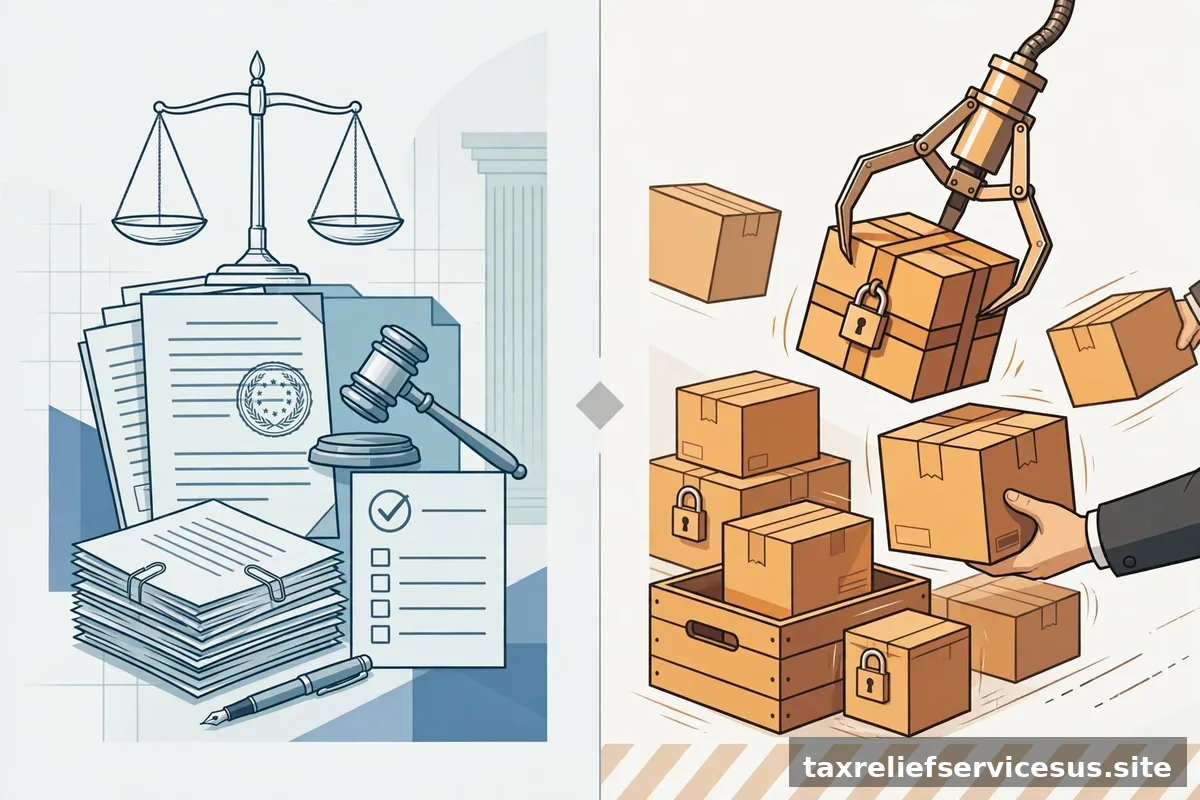
“The IRS filed a lien against me” and “the IRS levied my account” sound similar, and people use them interchangeably. They are not interchangeable — they are two different tools, with different effects, different procedures, and different remedies. Confusing them can lead you to fight the wrong battle. This guide draws the distinction precisely.
General information, not tax or legal advice.
The Core Difference in One Paragraph
A tax lien is a claim — the government’s legal right against your property as security for the tax debt. It does not take anything; it encumbers what you own. A levy is the seizure — the government actually taking your property, wages, or bank funds to satisfy the debt. Think of it this way: the lien is the padlock on the door; the levy is walking through it and taking the furniture.
The Federal Tax Lien, Explained
A federal tax lien arises automatically when you owe taxes, the IRS assesses the liability and sends a bill (CP14), and you do not pay. This “silent” lien exists by law. The Notice of Federal Tax Lien (NFTL) — filed in public records — is what makes it visible to the world.
What a filed lien does:
- Attaches to everything you own — real estate, vehicles, business assets — and to property you acquire after the lien is filed, while it remains in force.
- Establishes priority against other creditors — the IRS gets in line ahead of most.
- Appears in public records, visible to lenders, buyers, and title companies.
- Complicates sales and refinancing — selling property with a lien attached generally requires satisfying or subordinating the lien.
What a lien does not do: it does not take money from your paycheck or bank account. That requires a levy. (Note: since 2018, tax liens no longer appear on the three major credit bureau reports — but lenders still find them in public records during underwriting.)
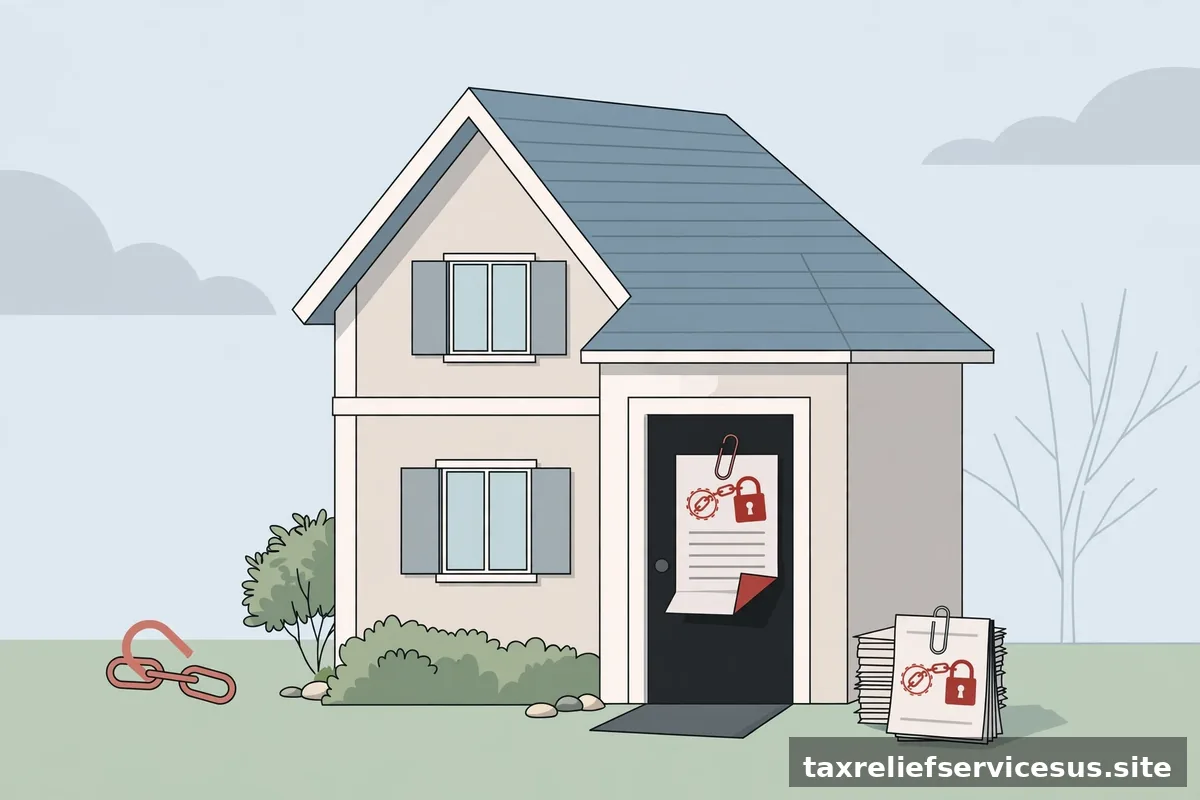
The Levy, Explained
A levy is the actual seizure of property to pay the debt — wages (wage garnishment), bank accounts (bank levies), accounts receivable, and in rare cases physical property. Unlike the lien, a levy requires the full notice sequence (CP14 → CP501 → CP503 → CP504/LT11) and your 30-day CDP appeal rights before it issues.
Key levy facts:
- Wage levies are continuous — they stay until released or the debt is resolved.
- Bank levies are one-shot — they capture what is there when processed, with a 21-day hold before funds transfer.
- Levies can reach retirement accounts and Social Security (under special programs) in some circumstances.
- Seizure of a primary residence requires special approvals and is rare — but legally possible.
Side-by-Side Comparison
| Feature | Tax Lien | Levy |
|---|---|---|
| What it is | Legal claim against property | Actual seizure of property/money |
| Takes your money? | No | Yes |
| Requires notice sequence + appeal rights? | No (arises by law; NFTL filing has its own CDP notice) | Yes — 30-day CDP window |
| Affects selling property? | Yes — major complication | Only the seized property |
| Duration | Until debt resolved or collection statute expires (generally 10 years) | Until released, debt paid, or arrangement made |
| Can you appeal? | Yes — CDP hearing on the NFTL filing | Yes — CDP hearing before levy |
Lien Priority Wars: Who Gets Paid First
One of the lien’s most consequential features is priority — when property is sold, who gets paid first. The general rule is “first in time, first in right”: the federal tax lien’s priority dates to when the tax was assessed, and the filed NFTL puts the world on notice.
- vs. mortgages: a mortgage recorded before the NFTL filing generally has priority for the original loan amount. But future advances or refinancing after the NFTL filing can lose to the tax lien — which is why refinancing with a filed lien is so difficult.
- vs. judgment creditors: the tax lien typically beats later-filed judgments, which is why credit card companies and other creditors watch NFTL filings nervously.
- vs. buyers: a buyer who purchases property after the NFTL is filed generally takes it subject to the lien — which is why title searches exist and why sales stall.
- Superpriority exceptions: certain interests (like purchase-money mortgages and some mechanic’s liens) can beat even an earlier tax lien in narrow circumstances. This is attorney territory.
Practical meaning: the lien does not just sit there — it actively outranks most of your other financial relationships. Resolving it is not just about the IRS; it is about unlocking your financial life.
Real-World Scenarios: Lien and Levy in Action
Scenario 1: Selling a house with a lien
You accept an offer on your home; the title search reveals a $28,000 NFTL. The sale cannot close cleanly. Options: pay the lien from sale proceeds at closing (most common), apply for a discharge of the property from the lien (the IRS gets paid from proceeds, lien released as to that property), or watch the buyer walk. With planning, this resolves in weeks; discovered at the closing table, it kills deals.
Scenario 2: The Friday bank levy
You owe $12,000, ignored the notices, and the IRS levies your checking account holding $9,000 — rent is due Monday. The 21-day window (see our bank levy guide) is your lifeline: call the IRS immediately, document the hardship (rent due date, amount), propose an installment agreement, and request release. Many taxpayers in this exact scenario get partial or full release within days — because they engaged.
Scenario 3: Lien filed, levy threatened
The NFTL is filed (lien securing the debt) and the LT11 arrives (levy coming in 30 days). This is the fork in the road: request the CDP hearing within 30 days, propose an installment agreement or OIC at the hearing, and you can resolve both the collection threat and set up lien withdrawal — all in one proceeding. Miss the deadline, and you fight the levy without the suspension shield.
Which Should You Worry About First?
The levy is the emergency; the lien is the chronic condition. A levy takes money you need now. A lien restricts what you can do with property over time. If both are in play, stop the levy first (it is time-critical), then address the lien.
That said, do not ignore liens. An unaddressed lien outlives most people’s attention spans — it sits in public records for years, surfacing at the worst moments: the mortgage application, the home sale, the business loan. Resolve the underlying debt and both tools go away together.
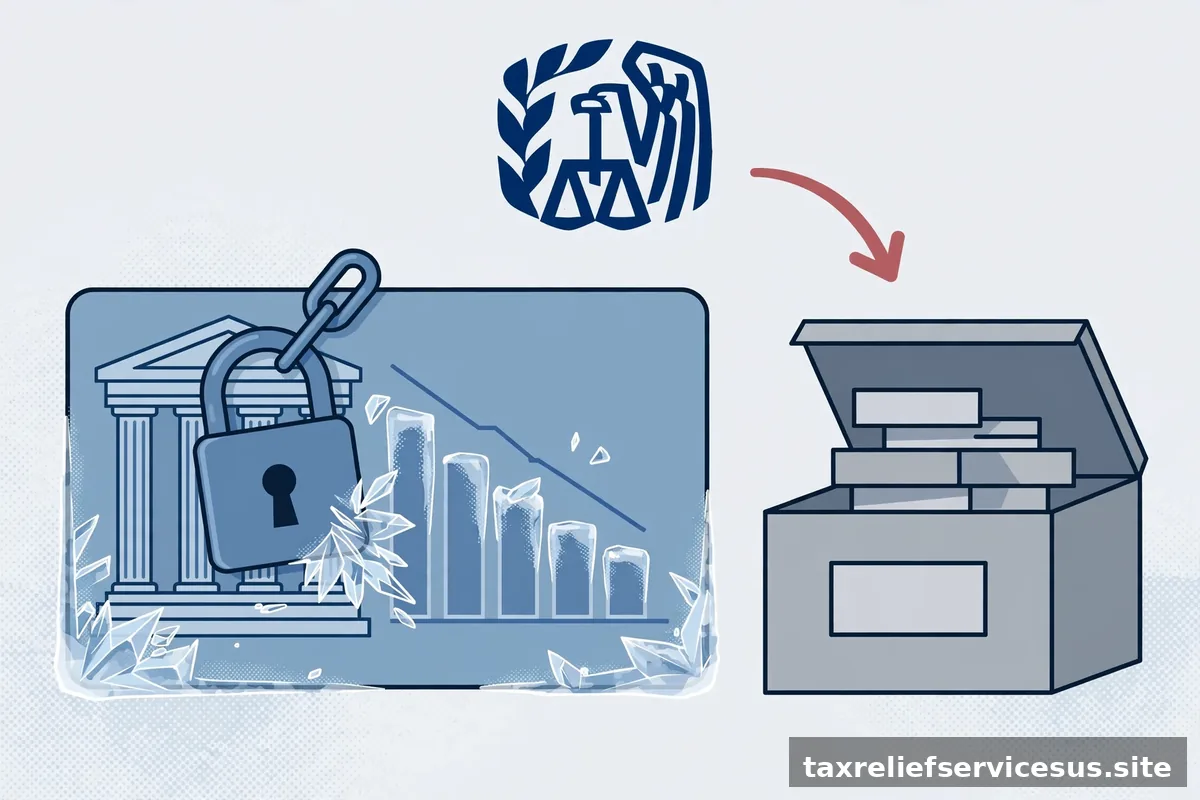
Getting Rid of a Tax Lien
- Pay the debt in full — the lien releases (the IRS issues a release, generally within 30 days).
- Enter an installment agreement — in some cases, the IRS will withdraw the NFTL (different from release — withdrawal removes the public notice as if it were never filed) for qualifying agreements.
- Offer in compromise accepted — the lien is released upon satisfaction of the offer terms.
- Discharge or subordination — procedures allowing property sales or refinancing to proceed despite the lien, without fully paying the debt.
- Collection statute expiration — the lien generally expires with the 10-year collection period (with exceptions that extend it).
- Currently-not-collectible status — the lien typically remains, but enforced collection pauses.
Getting Rid of a Levy
- Release for hardship — the IRS must release a levy causing economic hardship.
- Enter an arrangement — installment agreement, OIC, or CNC status typically triggers release.
- CDP hearing — requested within 30 days, suspends collection while alternatives are considered.
- Full payment — immediate release.
- Procedural defects — skipped notices can invalidate a levy; raise them immediately.
Our detailed guides cover wage levies and bank levies step by step.
Common Myths, Corrected
- “A lien means they’ll take my house.” No — a lien secures the debt against the house; taking it requires a levy with special approvals. But the lien does mean you cannot sell or refinance cleanly without dealing with it.
- “If it’s not on my credit report, the lien doesn’t matter.” It matters to every lender who checks public records — which mortgage and business lenders do.
- “I can just wait out the lien.” Ten years is a long time to have encumbered property — and actions like OICs, installment agreements, or leaving the country can extend the clock.
- “Paying the levy payment means the lien is gone.” Related but separate. Levy payments reduce the debt (which helps), but the lien releases only when the underlying conditions are met.
Frequently Asked Questions
Can the IRS have both a lien and a levy on me at once?
Yes — commonly. The lien secures the debt while the levy collects it. Resolving the underlying debt addresses both.
I never got notice of the lien. Is it valid?
The lien itself arises by operation of law when the statutory conditions are met. The filing of the NFTL triggers its own CDP notice and hearing rights — if you did not receive that notice, raise it promptly.
Can I sell my house with a tax lien?
Generally only by satisfying the lien from the proceeds, obtaining a discharge of the property from the lien, or subordinating the lien — all established IRS procedures. Talk to a tax professional before listing.
Will a tax lien show on my credit report?
Since 2018, the three major credit bureaus do not report tax liens. But the NFTL is a public record — mortgage lenders, auto finance companies, and landlords who check public records will still find it. Do not confuse “not on the credit report” with “invisible.”
Can the IRS levy without filing a lien first?
Yes. The lien arises automatically by law when you do not pay after assessment; the NFTL filing is a separate step. A levy requires its own notice sequence regardless of whether an NFTL was ever filed. The two tools operate on independent tracks.
Verify with official sources: confirm current rules, forms, and deadlines via understanding a federal tax lien and Form 12153 for a Collection Due Process hearing — IRS guidance changes, and the official pages are the authority.
Disclaimer: General information only, not tax or legal advice.