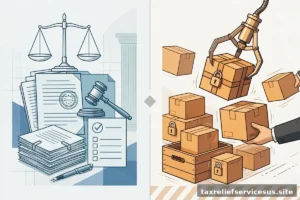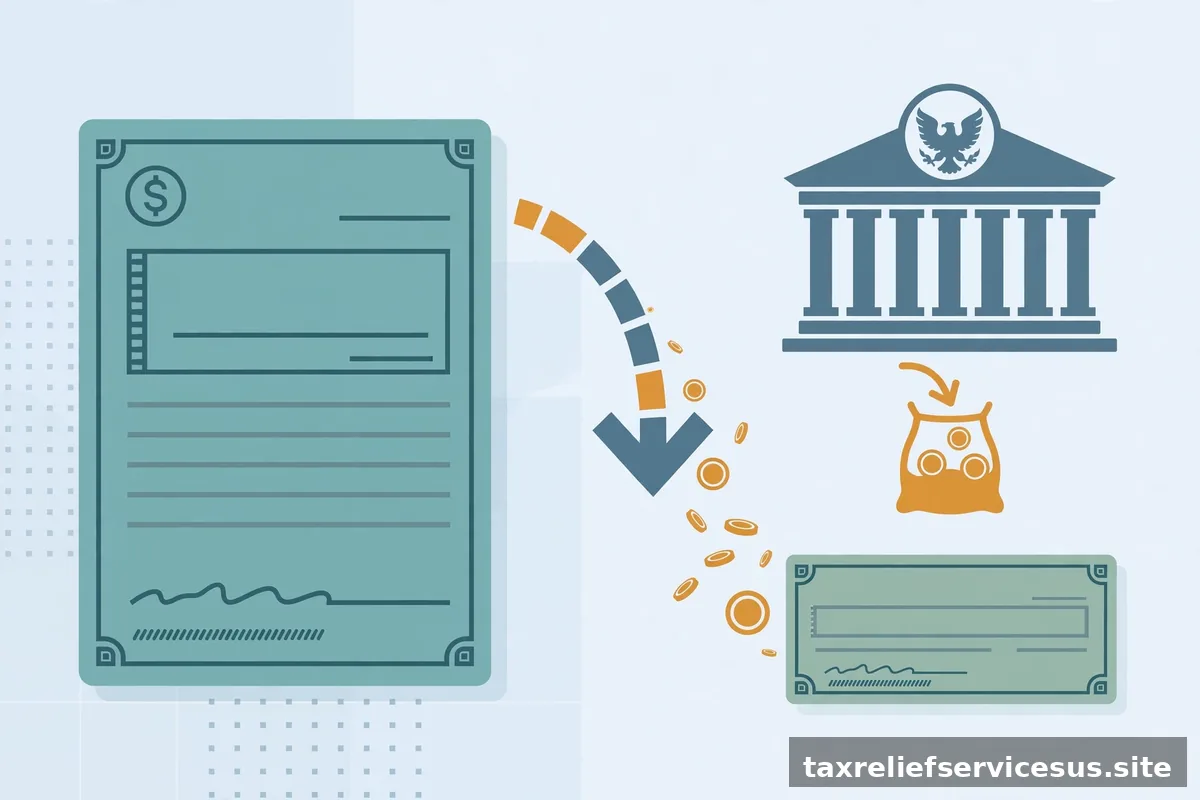
Few IRS actions inspire more panic than a wage garnishment — the government taking money directly from your paycheck before you ever see it. Here is what the panic obscures: a wage levy is one of the most preventable IRS actions. It arrives at the end of a long, documented notice sequence, and at almost every step you have options to stop it. This guide explains how wage levies work, how much the IRS can take, and five proven ways to get one released.
Terminology note: the IRS calls it a levy; most people say garnishment. Same thing. General information, not tax or legal advice.
How a Wage Levy Works
A wage levy (Form 668-W) is a legal order the IRS sends to your employer, requiring the employer to send a portion of your wages directly to the IRS each pay period. Unlike a one-time bank levy, a wage levy is continuous — it stays in effect until the debt is paid, the levy is released, or the collection statute expires. Your employer must comply; refusing exposes the employer to liability.
What makes wage levies particularly painful:
- They take from gross pay before you budget — the money never reaches your account.
- They are visible to your employer — your payroll department and often your manager learn about your tax debt.
- The amount can be severe — the IRS exempts only a small amount for basic living expenses (based on your filing status and dependents, per published tables), and takes the rest.
The Notice Sequence: It Never Comes Without Warning
The IRS cannot levy your wages out of the blue. The law requires a sequence:
- CP14 — Balance Due. The opening notice stating what you owe.
- CP501 and CP503 — Reminders. Escalating notices as the balance sits unpaid.
- CP504 — Final Notice of Intent to Levy. The critical one: it warns that enforced collection is coming.
- LT11 / Letter 1058 — Final Notice with appeal rights. This notice triggers your right to a Collection Due Process (CDP) hearing — you have 30 days from its date to request one with Form 12153.
- The levy issues — but only after the 30-day CDP window passes (or the hearing concludes).
This sequence typically spans months. Every unopened envelope was an opportunity to set up a payment plan and avoid the levy entirely. The lesson is blunt: open your mail.

How Much Can the IRS Take From Your Paycheck?
Unlike some creditors capped at 25% of disposable earnings, the IRS wage levy works in reverse: it exempts a small protected amount (based on filing status, pay frequency, and number of dependents — published in IRS tables) and can take everything above it. For many workers, that means the levy captures most of the paycheck.
The exempt amount is deliberately minimal — enough for bare subsistence, not for your actual budget. This severity is intentional: Congress designed the levy to be painful enough that taxpayers engage before it issues. Which brings us to the good news — engagement still works after it issues, too.
Your CDP Appeal Rights: The 30-Day Window
The Collection Due Process hearing is your most powerful procedural right. Request it within 30 days of the LT11/Letter 1058, and:
- Collection is generally suspended while the appeal is pending — the levy cannot issue (with limited exceptions).
- You get a hearing with an independent settlement officer (not the collector pursuing you).
- You can propose alternatives: installment agreement, offer in compromise, currently-not-collectible status, or penalty abatement.
- You can challenge the underlying liability itself if you never had a prior chance to dispute it.
- If you disagree with the outcome, you can petition the Tax Court.
Miss the 30-day window and you lose the suspension of collection — though you can still request an “equivalent hearing” within a year (without Tax Court rights). Mark the deadline the day the notice arrives.
Five Ways to Stop or Release a Wage Levy
1. Enter an installment agreement
The most common resolution. Propose a payment plan the IRS accepts, and the levy is typically released as part of the arrangement. See how to apply online — though with an active levy, calling may be faster.
2. Prove economic hardship (CNC status)
If the levy leaves you unable to meet basic living expenses, the IRS can place your account in currently-not-collectible status and release the levy. You will need to document income and expenses — the hardship must be real and documented, not just uncomfortable.
3. Submit an offer in compromise
A pending OIC generally suspends enforced collection. This is a slower path (months), so it works best combined with immediate hardship arguments — but it addresses the underlying debt, not just the levy.
4. Request a CDP hearing (within 30 days)
As described above — the procedural shield that pauses collection while alternatives are considered. Even if you missed the window, an equivalent hearing can still produce a workable resolution.
5. Pay the balance (or have it paid)
Obvious but worth stating: full payment releases the levy immediately. Sometimes a family loan, asset sale, or retirement distribution (weigh the tax consequences) beats months of garnished paychecks. Run the numbers — the levy’s severity often makes borrowing rational.

Levy vs. Lien vs. Garnishment: The Vocabulary
People mix these up, and the confusion costs them. Precise definitions:
- Tax lien: a claim against your property securing the debt — it attaches to what you own but takes nothing. It damages credit and complicates sales. See our full comparison.
- Levy: the seizure itself — the IRS actually taking property or money. A levy requires the notice-and-appeal sequence; a lien does not.
- Garnishment: the everyday word for a wage levy — money taken from your paycheck via your employer.
The sequence in most cases: lien first (securing the debt), then levy (collecting it). Understanding which one you are facing determines which defenses apply.
Special Situations: Multiple Jobs, Bonuses, Retirement Income
- Multiple jobs: the IRS can levy each employer. The exempt amount is computed per levy, but coordinated levies can still capture most of your total income.
- Bonuses and commissions: generally fully leviable — the exempt-amount tables are built around regular pay periods, and irregular income gets little protection.
- Retirement income: Social Security benefits are subject to the Federal Payment Levy Program (generally 15% for tax debts) rather than the standard wage levy tables. Private pensions can be levied. Required minimum distributions sitting in bank accounts are levy targets too.
- Independent contractors: as noted above, client payments can be levied as accounts receivable — and a levy on your biggest client can effectively shut down your business. Contractors should treat balance-due notices as emergencies.
- Joint returns: a levy for a joint liability can reach either spouse’s wages. Innocent spouse relief exists for qualifying situations but is a separate process from stopping the levy.
After the Levy Is Released: Staying Free
- Honor the arrangement that got the levy released — defaulting can bring it back, and second levies come with less patience.
- Stay compliant going forward: file on time, keep withholding/estimates adequate. New balances restart the whole cycle.
- Address the underlying debt, not just the levy. A released levy with an unaddressed balance is a temporary reprieve.
- Check for a tax lien. Levies and liens often travel together — see our lien vs. levy guide. A released levy does not remove a filed lien.
What Your Employer Sees (and What to Tell Them)
Your payroll department receives the levy order with instructions — they will know the amount and the creditor (the IRS). Most payroll professionals process these routinely and discreetly; it is far more common than employees realize. You do not owe your manager a detailed explanation, but a brief, calm “I’m resolving a tax matter; it’s being handled” ends speculation. What actually impresses employers is resolution — showing that you engaged and fixed it.
Frequently Asked Questions
Can I quit my job to stop the levy?
The levy follows your wages — quitting stops that levy’s collection, but the debt remains, accrues penalties and interest, and the IRS can levy your next employer or your bank account. It is avoidance, not resolution, and it usually makes things worse.
I’m a contractor, not an employee. Can the IRS still levy my income?
Yes — the IRS can levy payments owed to you by clients (accounts receivable levies). The mechanics differ, but self-employment income is not shielded.
How long does a wage levy last?
Until the debt is paid in full, the levy is released, you enter an alternative arrangement, or the 10-year collection statute expires. It does not “time out” on its own in any practical sense.
Can states garnish wages for state tax debt?
Yes — state tax agencies have their own levy powers, sometimes with fewer procedural protections than the IRS. See our state tax debt guide.
I never got the final notice. Can they still levy?
The IRS must send required notices to your last known address — actual receipt is not always required. If you moved without updating your address, the notices may have gone to the old one. Keep your address current with the IRS (Form 8822) and open all mail.
The levy amount looks wrong. What do I do?
Levies sometimes reflect outdated balances (payments not yet credited, penalties still accruing). Pull your account transcript to verify the true balance, and raise discrepancies immediately — in your CDP hearing or directly with collections. Never ignore a levy because you think the math is off; challenge the math while engaging.
Disclaimer: General information only, not tax or legal advice. If a levy is active or imminent, consider contacting the IRS immediately or getting professional help.