State penalties and interest can transform a manageable tax balance into a crushing one — some states impose penalties that rival or exceed federal rates, and they compound relentlessly. The good news: nearly every state offers some form of penalty relief, and states grant it more often than taxpayers expect — often simply because nobody asks.
This guide maps the types of state penalty relief, the arguments that work, and how to request it effectively. General information, not tax or legal advice; verify your state’s current provisions.
What State Penalties Look Like
- Failure-to-file penalties: typically a percentage of unpaid tax per month late, often capped (caps vary — some at 25% like federal, others higher).
- Failure-to-pay penalties: monthly percentages on the unpaid balance — the slow bleed that doubles debts over time.
- Underpayment/estimated tax penalties: for insufficient quarterly payments, hitting freelancers and the self-employed hardest.
- Negligence and fraud penalties: much steeper — negligence often 10–20%, fraud 50–75% of the underpayment. Fraud penalties are rarely abated.
- Interest: technically not a penalty, but functionally similar — accrues on unpaid tax and on penalties in most states. Interest is almost never abated (it is the time value of money), so focus requests on penalties.
Types of State Penalty Relief
First-time abatement equivalents
Many states offer first-time penalty relief for taxpayers with clean compliance histories — sometimes formalized like the federal FTA, sometimes discretionary. If your record was clean before this incident, say so explicitly: “I have filed and paid on time for X years; this was an isolated lapse.” Clean history is the single strongest argument.
Reasonable cause
The universal standard: penalties may be abated when the failure was due to reasonable cause and not willful neglect. Arguments that work at the state level mirror federal ones:
- Serious illness, injury, or death in the immediate family.
- Natural disaster, fire, or casualty destroying records.
- Reliance on incorrect professional advice (documented).
- IRS or state agency error or misleading guidance.
- Circumstances beyond your control — with documentation tying the circumstance to the specific failure and time period.
Statutory and administrative waivers
Some states have specific statutory provisions — disaster-related waivers, military service protections, or amnesty-adjacent programs. Check whether any special provision covers your situation before making a general reasonable-cause argument.
Voluntary disclosure penalty waivers
As covered in our state payment plans guide, voluntary disclosure programs often include penalty waivers as the incentive for coming forward. If you have multi-year exposure, the VDA path may deliver more penalty relief than individual abatement requests.
How to Request Penalty Relief: The Method
- Pay the underlying tax first if you can. Abatement requests are stronger when the tax itself is paid — you are asking for mercy on the add-ons, not disputing the debt.
- Identify the right channel: some states have dedicated abatement request forms; others handle it by letter or phone. Check the revenue department’s site.
- Write a clear, factual letter: identify the tax periods, the penalties at issue, and the specific grounds (first-time history, reasonable cause with dates and facts). One to two pages — no life story, no legal brief.
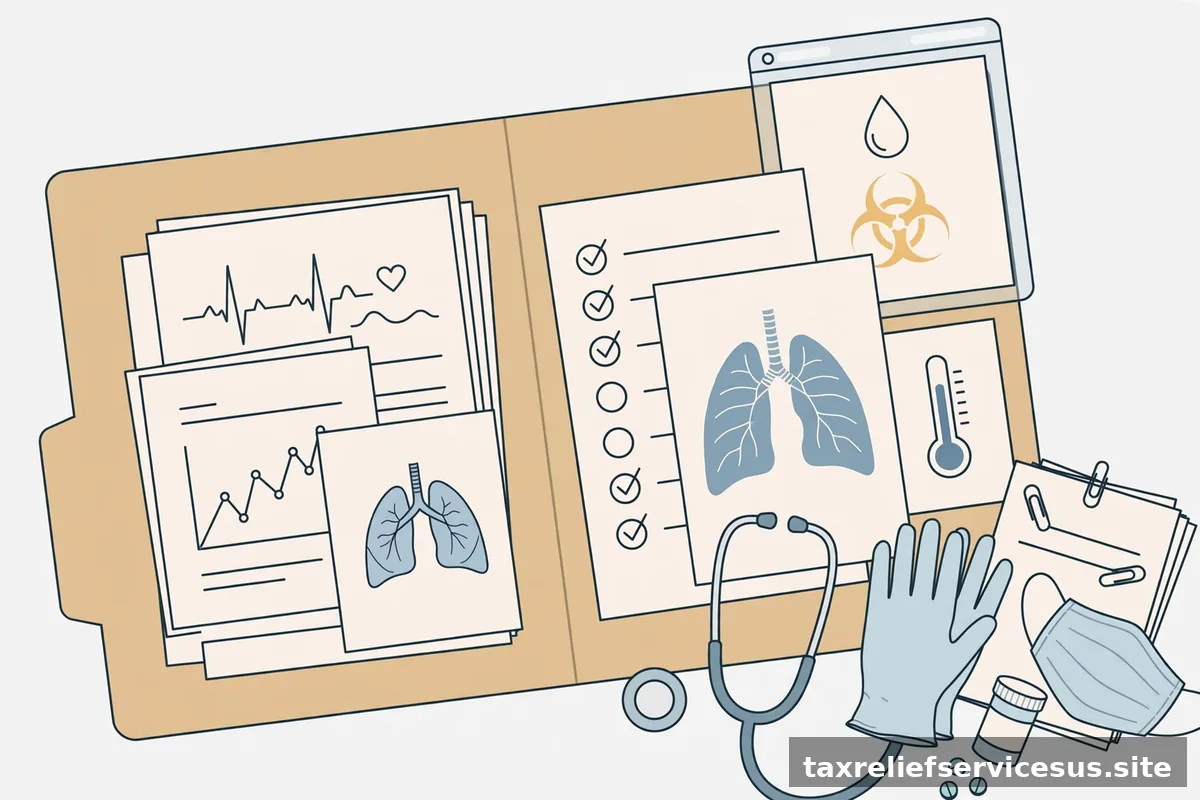
- Attach documentation: medical records, death certificates, disaster declarations, professional correspondence — whatever proves the cause. Assertions without evidence are routinely denied.
- Request specific relief: “I request abatement of the failure-to-file and failure-to-pay penalties for tax year 2023 under [provision]” beats “please reduce my penalties.”
- Follow up: note the date submitted, the reference number, and follow up if no response within the state’s stated timeframe.
- Appeal denials: most states offer administrative appeal of abatement denials. A denial at first level is not the end — many abatements are granted on appeal or reconsideration.
Arguments That Work (and Ones That Don’t)
Work: documented medical emergencies with dates matching the filing failure; reliance on a tax professional who gave wrong advice (with the engagement letter and correspondence); state agency error (with the misleading notice attached); first offense after years of compliance; disaster with official declaration.
Do not work: “I didn’t know” (ignorance of the law is not reasonable cause); “I couldn’t afford it” (financial hardship explains non-payment poorly — though it can support payment plans); “my accountant messed up” without documentation of the accountant relationship and the error; vague claims without dates or evidence; blaming the state without proof.
The pattern: specific, documented, time-bound, and beyond your control. Every successful abatement argument has these four qualities.

Timing and Sequencing Strategy
- Request abatement after the tax is paid (or at least after a payment plan is in place) — it positions you as responsible, not evasive.
- Do not wait for the “perfect” moment — some states have time limits on abatement requests. Check deadlines; a late request can be denied on procedural grounds alone.
- Coordinate with OIC/payment plans: if pursuing a state compromise, penalties are part of the negotiated amount — separate abatement requests may be unnecessary or even counterproductive. If on a payment plan, abatement reduces the total the plan must cover.
- Multiple years: request relief for all eligible periods at once, with the compliance history argument covering the pattern.
- After denial, regroup — don’t just resubmit identically. Address the denial reasons with new evidence or arguments; repeated identical requests waste everyone’s time.
Sample Abatement Request: The Framework
Below is a structural template — adapt the bracketed parts to your situation. Keep it to one or two pages:
[Your name, address, account/SSN]
[Date]
[State Department of Revenue, address]Re: Request for Penalty Abatement — [Tax type], [Periods], Account [number]
Dear Sir or Madam:
I respectfully request abatement of the [failure-to-file / failure-to-pay] penalties assessed for [periods], totaling $[amount]. The underlying tax of $[amount] has been paid in full on [date] [or: is being paid under installment agreement dated [date]].
Grounds: [Choose one and detail it]
First-time compliance history: “I have filed and paid all [state] taxes on time for [X] years prior to this incident, as your records will confirm. This lapse was isolated and has been corrected.”
Reasonable cause: “On [dates], [specific event — e.g., ‘I was hospitalized for emergency surgery’ / ‘a wildfire destroyed my home and records’ / ‘my tax preparer provided incorrect filing advice, see attached correspondence’]. This directly prevented timely [filing/payment] for the periods at issue. Enclosed please find [hospital records / disaster declaration / preparer correspondence] documenting these facts.”
I have taken steps to prevent recurrence: [withholding adjusted / new preparer engaged / calendar system implemented].
Thank you for your consideration.
Sincerely,
[Signature, printed name, phone]Enclosures: [list]
The anatomy of why this works: it identifies the exact relief requested, states the compliance posture (tax paid), picks one clear ground, ties facts to dates, attaches proof, and shows prevention. Reviewers process hundreds of these — clarity is persuasion.
Penalty Relief for Businesses
Businesses face additional penalty types and slightly different dynamics:
- Sales tax penalties are often the largest business exposure — and states take sales tax delinquency personally (it is “trust fund” money collected from customers). Relief is available but expect closer scrutiny.
- Withholding penalties for failure to remit employee withholding are similarly severe — some states impose personal liability on responsible officers.
- First-time arguments work for businesses too — a clean filing history across quarters is persuasive.
- Reasonable cause for businesses often centers on key-person events (owner illness, bookkeeper fraud/embezzlement — with police reports), natural disasters affecting business premises, or reliance on professional advice.
- Voluntary disclosure is especially valuable for businesses with multi-year sales tax exposure — the limited lookback alone can save more than any abatement.
Record-Keeping That Prevents Penalties
The cheapest penalty relief is never needing it. Systems that work:
- A tax calendar with every federal and state deadline — filing, payment, estimated — with reminders two weeks out, not two days.
- Separate tax savings: freelancers and businesses should sweep estimated-tax money into a dedicated account with each payment received. Money earmarked for taxes does not get “accidentally” spent.
- Professional engagement letters that specify exactly which returns the preparer handles — most “my accountant was supposed to file it” disasters trace to vague understandings.
- Address updates with every state where you file — notices sent to old addresses still count.
- Annual compliance review: one hour each January confirming all prior-year filings are complete and current-year estimates are set.
Frequently Asked Questions
Can interest be abated too?
Rarely. Interest compensates the state for the time value of money, and most states abate it only in narrow circumstances (state error causing the delay). Focus your energy on penalties — that is where relief is realistically available.
Should I hire someone to request abatement?
Simple first-time requests: usually DIY-able with a good letter. Complex reasonable-cause cases, large penalties, or fraud-penalty territory: professional help is worth it. The fee is often a fraction of the penalties at stake.
I got federal penalty relief. Does that help with the state?
It does not automatically transfer — but include the federal abatement as supporting evidence. “The IRS granted first-time abatement for the same period” is persuasive context for a state reviewer.
How long do abatement decisions take?
Weeks to months depending on the state and complexity. Simple first-time requests are often fastest. Follow up if the state’s published timeframe passes.
I owe penalties in multiple states. Can I use one request?
No — each state is a separate jurisdiction requiring its own request under its own procedures. Prioritize by dollar amount and enforcement threat, but work through all of them; a template letter adapted per state keeps the effort manageable.
Verify with official sources: confirm current rules, forms, and deadlines via IRS penalty relief options and IRS collection process overview — IRS guidance changes, and the official pages are the authority.
Disclaimer: General information only, not tax or legal advice. Verify current provisions with your state’s department of revenue.